The 7 Key Foods of the Mediterranean Diet
What exactly makes up a true Mediterranean diet? Read about the seven core foods that drive its health benefits.


- The health benefits of the Mediterranean diet do not come from a single "superfood," but rather a mixture of different healthy whole foods.
- The diet is defined by a clear list of foods: plant-based, healthy fats from fish and olive oil, and small amounts of high-quality meat and dairy.
- Rather than "good vs. bad", it categorises foods by frequency: what to eat daily, weekly, and what to treat as a rare exception.
The Mediterranean diet is consistently cited by nutritionists, scientists and health organisations as one of the world's healthiest diets. So, understanding why it works requires knowing exactly what (and what shouldn't) find its way onto your plate. The diet is rooted in traditional food and eating habits that have been refined over centuries.
By swapping out ultra-processed foods for nutrient-dense whole foods, plants, healthy fats, and lean proteins, this way of eating (and living) has decades of research suggesting that it has a host of health benefits that work with human instincts, not against them.
Has there been any other diet that has been put under the same scrutiny, or has stood the test of time better than any other? We don't think so. So, this article breaks down the seven foundational foods of the Mediterranean diet and the specific role each of them has in protecting your health.
On this page:
- Fish and seafood
- Whole grains
- Legumes
- Extra virgin olive oil
- Dairy and fermented foods
- Vegetables
- Red meat and processed meat
1. Fish and seafood
Compared to standard Western diets, fish and seafood have a central place in the Mediterranean diet. They provide unique nutrients that contribute to the diet’s health benefits. It’s no coincidence that other healthy regions around the world (i.e., “blue zones”) all seem to have higher than average intake of fish and seafood.
They seem to particularly like the cheap, fresh, local, and sustainable oily species that are rich in omega-3 fatty acids (e.g., anchovy, mackerel, sardines). Regular consumption of this type of fish represents one of the Mediterranean diet's most distinctive features.
The cardiovascular health benefits of fish intake are well researched. Consuming fish two to three times weekly reduced deaths caused by cardiovascular disease compared to lower intakes of fish.[1]
These benefits are thought to come from the long-chain omega-3 fatty acids: eicosapentaenoic acid (EPA) and docosahexaenoic acid (DHA). These nutrients are shown to reduce inflammation, improve blood vessel health and your blood lipid profile.[2]
Beyond the cardiovascular benefits, regular intake of fish supports brain health. The human brain is nearly 60% fat, with DHA being an important component of your nerves. Regular fish intake (particularly of the fatty species) has been associated with slower cognitive decline, reduced dementia risk, and better memory in older adults. Studies suggest that consuming fish at least twice a week may reduce Alzheimer's disease risk, with benefits more obvious when fish replaces red meat.[3]
The nutritional benefits of fish also extend beyond omega-3s. Seafood provides high-quality protein, meaning it is beneficial for maintaining muscle mass. Fish also provides essential micronutrients that are often lacking in modern diets: vitamin D, selenium, iodine, and B vitamins, particularly vitamin B12.
Smaller fish, which are commonly consumed whole (like sardines and anchovies), also provide calcium from their edible bones, which can support the health of your own bones.
Sustainability and safety considerations matter when adding fish to your diet. Fatty fish like salmon, mackerel, sardines, herring, and anchovies offer the highest omega-3 content and are generally among the more sustainable choices. Smaller fish, lower on the food chain, also tend to accumulate fewer environmental contaminants like mercury compared to the large predatory ones.
Practical implementation is straightforward:
- Aim for at least two servings of fish a week, with at least one being a fatty variety rich in omega-3s. A single serving only equals approximately 3–4 ounces (85–115 g) once cooked.
- If you don’t like the flavour of fish, try some simple Mediterranean preparations. Grill it with lemon and herbs. Bake it with tomatoes and olives. Pan-sear it with garlic, rosemary, and olive oil. Gently poach it with aromatic vegetables.
- Canned fatty fish like tuna, sardines, mackerel, and wild salmon offer convenience and affordability while providing the same health benefits as fresh varieties, making regular consumption more accessible to everyone.
2. Whole grains
The distinction between whole grains and refined grains is important. Traditionally, Mediterranean people consumed grains in minimally processed forms: whole wheat bread, bulgur wheat, farro, barley, and brown rice. These whole grains retain their nutrient-rich bran and germ.
Studies have shown that consuming three servings of whole grains a day reduces the chances of dying from nearly all major diseases. But these benefits (mostly) disappear when the grains are refined.[4][5][6]
The health benefits of whole grains seem to come from the combination of nutrients they provide.
- The bran layer provides a lot of fibre, both soluble and insoluble, which slows digestion, stabilises blood sugar levels, lowers cholesterol, and feeds your “good” gut bacteria.
- The germ of the whole grain also contains B vitamins, vitamin E, healthy fats, and minerals (like magnesium, selenium, and zinc).
Whole grains also deliver phytonutrients that have antioxidant and anti-inflammatory properties. This combination of many different nutrients works together in ways that isolated nutrients can't replicate (known as the "food matrix effect").[7]
Whole grains support health in many ways:
- Their fibre content improves insulin sensitivity and helps control blood sugar, making them valuable for the prevention and management of diabetes.
- The “resistant starch” in whole grains reaches your colon intact (i.e., not digested or absorbed), where it ferments to produce short-chain fatty acids. These short-chain fatty acids reduce inflammation and support gut and metabolic health.
- Regular intake of whole grains is also associated with a healthier body weight, probably because they keep you feeling fuller for longer.[8]
As part of the Mediterranean diet, whole grains are typically consumed as part of balanced meals rather than by themselves. Whole-grain bread accompanies vegetable-rich stews, bulgur wheat forms the base of tabbouleh: a salad loaded with herbs and vegetables, barley is added to soups along with legumes, and pasta (preferably whole wheat) is served with tomato sauces and vegetables.
Combining whole grains with other Mediterranean foods increases the absorption of some of their nutrients and improves their flavour. The easiest way to get more of them into your diet is to replace refined grains with whole grain alternatives: choose whole wheat or whole grain bread over white, brown rice or farro over white rice, whole wheat pasta over regular, and steel-cut or rolled oats over instant oats and cereals. For most people, a lot can be gained by making this simple switch.
Portion sizes on the Mediterranean diet tend to be "moderate", meaning roughly half to one cup of cooked grains per meal. Grains serve as a base for vegetables, legumes, and healthy fats rather than dominating the plate.
Ancient grains like farro, bulgur, freekeh, and barley offer nutritional variety, along with authentic Mediterranean flavours, if you want to keep it traditional.
3. Legumes
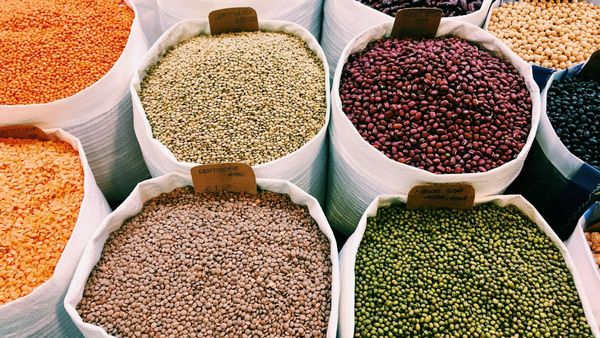
Legumes: beans, lentils, chickpeas, and peas are an important part of the traditional Mediterranean diet. They provide affordable, nutritious, high-quality plant protein that contributes towards the diet's health benefits. Several studies have reported that higher legume intake is associated with a reduction in the risk of cardiovascular disease, type 2 diabetes, and overall death rates.[9]
The nutritional content of legumes explains their protective effects. They provide a rare combination of protein, complex carbohydrates, and both soluble and insoluble fibre in one food. All these nutrients work together to help control blood sugar levels better, improve satiety and fullness, and support good metabolic health.[10]
Legumes have a low glycemic index, meaning they cause gradual rather than rapid rises in blood sugar, making them particularly valuable for diabetes prevention and management. Their soluble fibre binds with cholesterol in your digestive system, helping lower “bad” LDL cholesterol levels and reducing cardiovascular disease risk.[11]
Beyond macronutrients, legumes deliver an impressive mix of micronutrients that are often missing in most diets. They're rich in folate, iron, magnesium, potassium, and zinc. These minerals are crucial for everything from red blood cell formation to bone health and keeping the immune system working.
Legumes also provide nutrients with antioxidant and anti-inflammatory properties. Their resistant starch reaches the colon “intact”, meaning it feeds “good” gut bacteria that support health. They are the natural “prebiotics” that improve gut microbiome diversity and health.[12]
Legumes appear in countless traditional Mediterranean dishes. They’re generally combined with other ingredients (including other carbohydrates like whole grains and vegetables) and other flavourful ingredients (like olive oil, herbs, and spices).
Greek fasolada (white bean soup), Italian pasta e fagioli, Spanish lentil stew, Middle Eastern hummus and falafel, and Turkish bulgur-lentil pilaf are just a few famous examples. The practice of soaking dried legumes and cooking them slowly not only improves their digestibility but also improves their nutritional content.
Legumes are cheap, easy to cook, and can be stored for months. Aim for at least three servings a week, or daily for maximum benefits. A single serving is only half a cup cooked (80-90 g).[13]
Canned legumes are readily available and offer convenience as they are already cooked. They can be added to bulk out and improve the nutrition of soups, stews, and salads. They can also be puréed and made into healthy dips and spreads (like chickpea hummus). Not only that, but they can even be used to replace some meats in traditional Mediterranean dishes.
 Dr. Robert Davies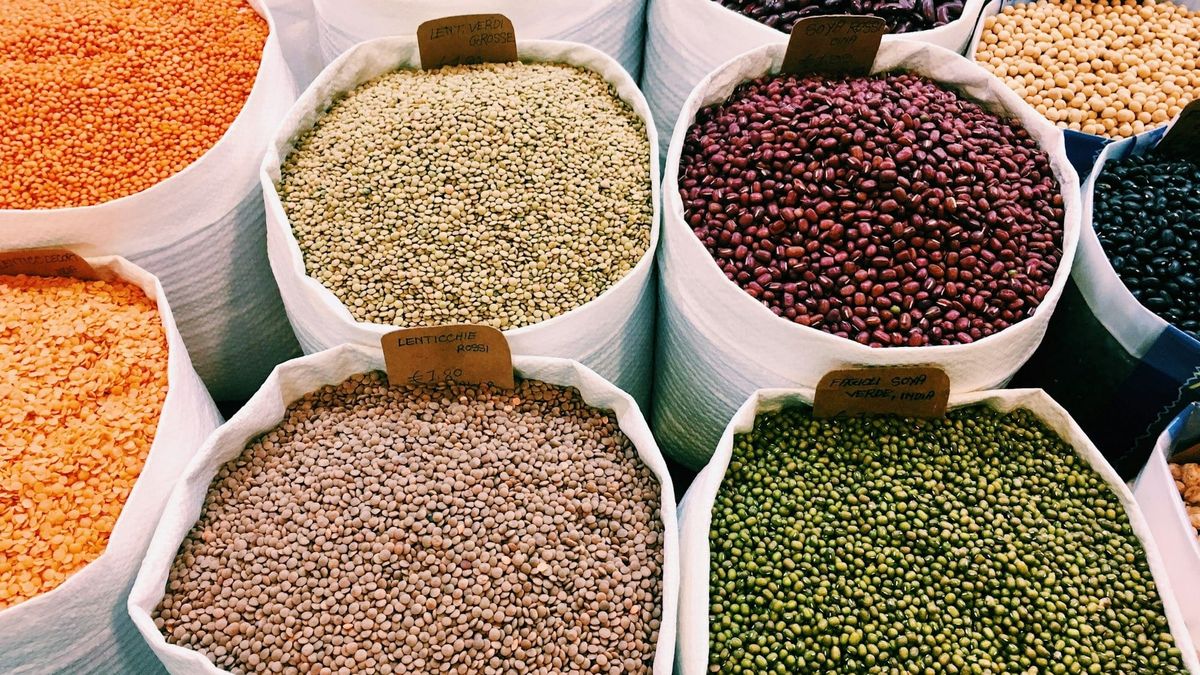
4. Extra virgin olive oil
The health benefits of extra virgin olive oil are well researched. Studies have shown that consuming extra virgin olive oil (~ 4 tbsp a day) improved cardiovascular health and protected against “cardiovascular events” (like heart attacks and strokes).[14]
These benefits are thought to come from its unique fatty acid profile. The “monounsaturated” oleic acid in extra virgin olive oil is thought to improve cholesterol ratios, reduce “bad” LDL cholesterol, and improve blood vessel function compared to other fats.[15]
In addition to its healthier fat profile, extra virgin olive oil is unique, as it offers a high concentration of “polyphenols”: plant compounds with antioxidant and anti-inflammatory properties.
“Oleocanthal”, one of the most studied polyphenols, has anti-inflammatory effects that have been compared to ibuprofen. “Oleacein” and “hydroxytyrosol” are other antioxidants found in extra virgin olive oil that protect your cells and their contents, and prevent premature biological ageing.
Studies have shown that the higher polyphenol content of extra virgin olive oil reduces inflammation and blood pressure and improves blood vessel health compared to other refined oils.[16]
Extra virgin olive oil intake has also been associated with reduced risk of type 2 diabetes, certain cancers, cognitive decline, and better brain health. The polyphenols in the extra virgin olive oil can get into the brain, where they reduce inflammation and keep the brain functioning properly.[17][18]
Lastly, the healthy fats found in extra virgin olive oil can also help the absorption of fat-soluble vitamins (A, D, E, K) and antioxidants from vegetables (e.g., carotenoids, lycopene) when they're consumed at the same time.
Not all olive oils are created equally. The "extra virgin" classification means the oil comes from the first cold pressing of olives without any chemical processing. This is important because it preserves maximum polyphenol content. High-quality extra virgin olive oil typically has a peppery, slightly bitter taste as the polyphenols create a sensation of burning in the back of the throat.
Storage is equally important: light, heat, and oxygen degrade some of these beneficial compounds, so choose oils in dark bottles, store away from heat and light, and use within a few months of opening. While cost often reflects quality, not all expensive oils are superior; look for harvest dates, certifications, and single-origin sources where possible.
Right away, you can start using extra virgin olive oil as your primary fat for cooking (under 375°F or 190°C) and finishing soups, stews, salads, whole grains, and really most types of Mediterranean dishes. It tends to complement everything. It’s even used to make cakes, cookies, and desserts in the Med.
Researchers have reported that you can even lose weight and improve health while still consuming quite a lot of extra virgin olive oil, despite it being calorie-dense16. But simply replacing all other refined fats with extra virgin olive oil, where you can, is a good first step to getting it into your diet.