Health Benefits of Legumes: Just One Can a Week
Adding just one simple can of legumes a week to your weekly shop can transform your heart and gut health, your wallet, and the planet.

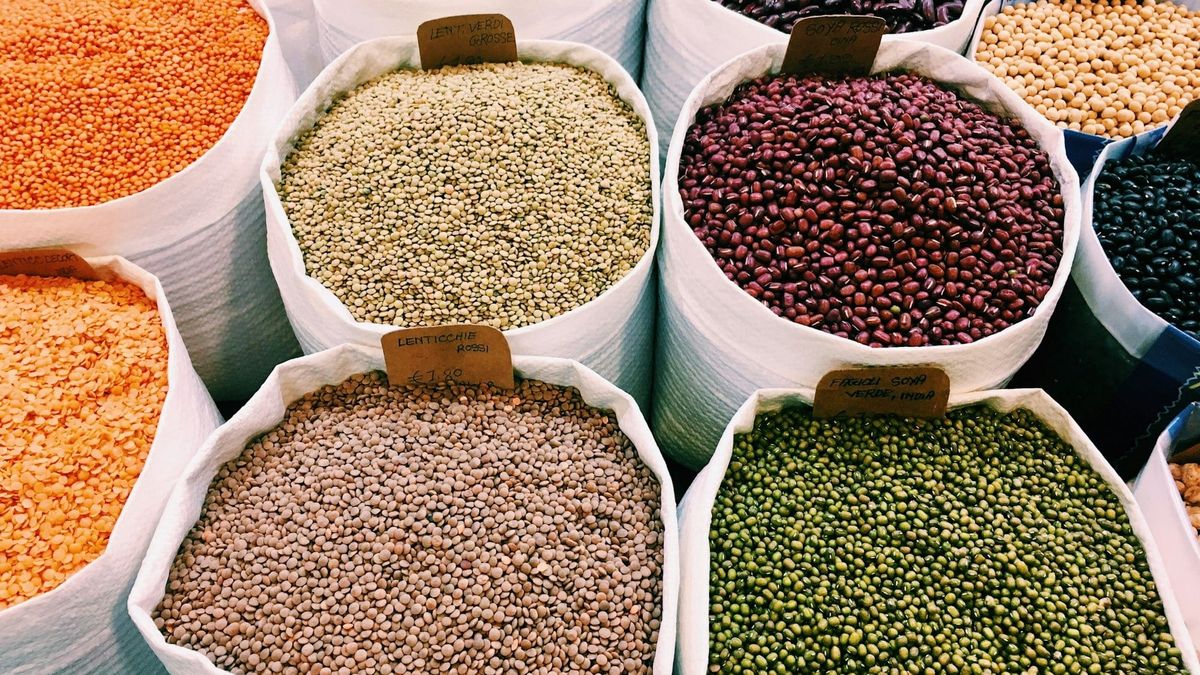
Legumes are probably the most undervalued and underappreciated food sitting in the back of your cupboard. They are pound-for-pound probably the single healthiest whole food around: only a handful of other foods come close.
One of our recommendations to fix the Western diet is to buy (at least) one extra boring standard can of chickpeas, lentils, black beans, kidney beans, or whatever legume is local to you, every single week.
If you don't want to, you don't need to soak or cook anything from scratch. Just open the tin, rinse the beans in a colander, and eat them across the week. Stir them into bolognese, chilli for taco or burrito fillings, mix them into soups and salads, or mash them into a spread for toast.
Can it be that simple?
Since the Second World War ended, a substantial dietary transition has taken place in the West. The Western diet is now based on refined grains, ultra-processed foods, animal products, added sugar and numerous other artificial ingredients.
These changes have led to widespread shortages of several essential nutrients, particularly dietary fibre, and several essential vitamins and minerals. And it's no surprise that rates of diseases have risen as well (e.g., type 2 diabetes, hypertension, obesity, heart and gut diseases), and continue to rise.
So, we believe one of the easiest solutions is to eat more beans. Specifically, just buy and eat at least one standard can (around 400 grams, 240 grams or 3×80g servings once drained) of legumes once a week.
Adding 3 extra servings of legumes a week to your diet addresses several common nutritional gaps at the same time. They are also cheap and great for the environment.
Legumes in the West: A History
Legumes are not a new thing; they are one of the oldest cultivated crops on Earth, and they were once a staple of the Western diet. The Romans ate them. So did the Native Americans.
For most of human history, people around the world have relied on them as a staple food. They were valued because they stored well during cold winters, provided lasting energy for physical work, and served as a cheap, reliable source of protein when meat was scarce or too expensive.
However, as the West industrialised, that changed. Grain and meat production was scaled up, processed food technology improved, and supply chains expanded and became more reliable. So, legumes lost their place on the dinner table.
Legume intake has fallen across Western countries to historically low levels. In Europe and North America, average legume intake is 10-30 grams a day; that's less than half of what we should be eating (as a bare minimum!). This change is unique to the West, as nearly all other regions around the world still consume legumes as a normal weekly (sometimes daily) staple.[1]
Part of the reason for their decline was their perception across the West. For some reason, they picked up a reputation as a "poor man's food". They were perceived as something you ate only when you couldn't afford meat. However, the nutrition (and thus the health outcomes) was completely ignored.
Adding more legumes to the Western diet isn't really a change; it's a revival!
Legumes: Nutritional Content
Legumes pack a huge amount of nutrition into a small, low-calorie package. They are low in total fat, low in saturated fat and cholesterol-free. A quarter of their dry weight is protein. That protein is "lysine-rich", which means it "complements" lysine-deficient grain and cereal proteins. This means that adding them to your diet improves the quantity and the quality of the protein in your diet.[2]
They also contain some essential minerals and vitamins that are missing from the Western diet, like:
- Folate (Vitamin B9) and non-heme iron that are particularly important nutrients for women and girls.
- Magnesium and potassium, which are important for keeping blood pressure under control.
- Fibre, resistant starch and low-GI carbohydrates that are good for your blood sugar levels, energy levels and gut health.
- They are also packed with "phytonutrients", which help lower cholesterol and inflammation (e.g., polyphenols, saponins, phytosterols).[3]
The Health Benefits of Legumes
Cardiovascular and heart health
Heart disease is the leading cause of death across Western nations, and legumes have protective effects for your heart. People who eat legumes generally have a lower risk of heart disease.[4]
Adding legumes to your weekly diet has been shown to lower cholesterol, lower "bad" LDL cholesterol, blood pressure, blood lipids, blood sugar levels and inflammation. The optimal amount for heart health was about 400 grams (or 2 cans) a week.[4][5][6]
Metabolic health and body weight
Because of their fibre, protein and low-GI carbohydrate content, legumes are slowly digested. This prevents spikes in blood sugar and insulin after eating them. So, adding legumes to your diet can lower blood glucose levels and improve insulin resistance over time.[5]
Legumes are also filling and have low-calorie density, so they can support healthy body weights. But for weight loss, you may need to eat more than the minimum amount we recommend (i.e., over 3 servings a week). Eating around one serving of legumes a day led to measurable weight loss (about half a pound a month).[7]
Gut health
The fibre-resistant starch found in legumes stays intact through your digestive system and goes on to feed your gut bacteria. In return for this, the "good" bacteria in your gut produce "short-chain fatty acids" and other substances that are beneficial for your health, such as:[8]
- Reducing inflammation and protecting your cells
- Improving your gut strength and gut function
- Lowering blood pressure and cholesterol
- Potentially lowering colorectal cancer risk[9]
The Benefits of Eating Legumes: Beyond Nutrition
While the health benefits of adding legumes to your diet are pretty solid, there are a few other positives that go in their favour, which are worth mentioning.
#1. Environmental impact
Unlike most commercial crops, legumes have their own bacteria in their roots, which pull in nitrogen (and other nutrients) from their surroundings and "fix" it in the soil. They are natural fertilisers that regenerate the soil. This means that farmers need less fertiliser to grow them (or the other crops they're rotated with), which lowers their "environmental footprint" (i.e., lower carbon and nitrogen dioxide emissions and water use).[10]
#2. Food security and locality
Because legumes need less fertiliser and regenerate the soil they're grown in, they're a genuinely sustainable crop that can be grown locally rather than being imported. They are a resilient and diverse crop. Different varieties can be grown across every region of the West, from the cooler Northern regions (e.g., lentils and peas) to the warmer arid ones (e.g., chickpeas and beans).
This means all Western regions can grow and buy them locally, supporting food security and farming communities in their own regions. After being harvested, they can also be dried or canned and then stored for years, making them a reliable staple that can act as a buffer for local supply chain interruptions.
#3. Cost
Pound-for-pound, legumes are one of the cheapest sources of protein around at just a couple of pence or cents per gram of protein. And this is before you've counted the other nutrients in them as well. A single serving of beans from a can can contain 20 grams of protein.
When you consider all the nutrients, they are probably one of the most nutrient-dense foods on the planet. You don't have to compromise your nutrition or your health if you need to reduce your food budget.
High-quality food doesn't have to be expensive.
Beans, beans the musical fruit ...
You probably know the rest of the song. However, people's perception of the flatulence of eating beans is generally exaggerated. Although some gas and bloating have been reported when people add more beans to their diet, this tends to disappear after a week, as your body adapts to them.
If you want to minimise gas and bloating, you can steadily increase the amount of beans you eat over a couple of weeks.[11]
#4. They're tried and tested
Legumes were previously a large part of the healthy Western food system for centuries. They can be grown, harvested, processed and supplied at scale. They can (and have) been embedded into Western food culture where there's a will (beans on toast, anyone?). This can be done again. Look at how other countries have done it:
- India has lentil dhal and rice.
- Mexico has beans and corn tortillas
- Asia has tofu and rice dishes
- Africa and the Caribbean have beans and rice dishes
- China has eight-treasure (bean) porridge
It is a common myth that legumes are bland, boring and tedious to prepare. To promote intake, they should be thought of as flavour carriers as they readily absorb herbs, spices and other flavours. They are flexible and fit in with almost all cuisines from around the world.
Making the Habit Stick
There are a few ways to make our at least 1-can-a-week recommendation stick.