6 Healthy Mediterranean Diet Salad Recipes
Learn the background, nutrition and health benefits of 6 quick, easy and authentic Mediterranean diet salad recipes.

1. Greek Salad
Greek salad, or “Horiatiki” (hor-ee-AH-tik-ee), is the quintessential village-style salad found on taverna tables across Greece. The authentic version is just ripe summer vegetables at their peak, generous chunks of feta, and a simple dressing of extra-virgin olive oil and oregano.
This salad embodies the Mediterranean principle that great food is made with great ingredients rather than complicated technique.
In addition to the vitamins and antioxidants from the vegetables and the healthy fats from the extra-virgin olive oil, the feta provides extra calcium and protein. Serve horiatiki as a side dish, light lunch, or in a meze alongside grilled fish and whole wheat flatbread.
- Serves: 4-6
- Time: 50 minutes
- Cost: ~$1 per serving
- Calories: 350 kcal per serving
- Source of: Calcium, Vitamin A, C, K
Ingredients
- 4 large ripe tomatoes, cut into wedges
- 1 cucumber, cut into thick half-moons
- 1 green bell pepper, cut into rings or strips
- 1 small red onion, thinly sliced
- 150g (5 oz) Greek feta cheese, whole slab
- 100g (¾ cup) Kalamata olives
- 80ml (⅓ cup) extra-virgin olive oil
- 1 tsp dried oregano
Instructions
- Cut the tomatoes into irregular wedges rather than neat slices; the varied shapes and sizes are part of horiatiki's rustic look. Season with salt and pepper, and let them sit briefly to release some juice, which will become part of the dressing.
- In a large shallow bowl or plate, combine the tomatoes (with juice), cucumber, pepper, and onion. Don't mix yet—the vegetables should maintain their distinct character rather than becoming muddled together.
- Season the vegetables with salt and pepper, then drizzle with the extra-virgin olive oil. Sprinkle the oregano over everything.
- Place the slab of feta directly on top of the vegetables—never crumble it beforehand. This presentation is presented traditionally, allowing everyone to break off pieces as they eat. Scatter the olives around the feta.
- Drizzle a final thread of extra-virgin olive oil over the feta and add one more pinch of oregano. Let the salad sit for 5–10 min before serving; this allows the flavours to meld and the tomato juices to mix with the extra-virgin olive oil, creating a natural dressing at the bottom of the bowl.
- Serve with bread for mopping up the dressing. The salad is best enjoyed within an hour of assembly, while the vegetables retain their texture and the feta its creamy integrity.
2. Xato Salad
Xato is a robust Catalan salad from the coastal towns south of Barcelona, particularly Sitges and Vilanova i la Geltrú, where it's celebrated with annual festivals.
This hearty winter salad traditionally combines curly endive with salt cod, tuna, anchovies, and olives, all bound together by romesco-style xató sauce. The dish reflects Catalonia's genius for marrying bitter greens with rich, savoury elements and a nutty sauce. However, this particular recipe has been adapted slightly to make it easier to make.
The fish provide lean protein and omega-3 fatty acids, while the nuts give healthy fats, vitamin E, protein, and magnesium. This substantial salad serves as a complete meal; serve it with crusty bread for mopping up the xato sauce.
- Serves: 4-6
- Time: 40 minutes
- Cost: ~$1.50 per serving
- Calories: 520 kcal per serving
- Source of: Protein, Fibre, Selenium, Omega-3, Vitamin C, E, K
Ingredients
For the salad
- 300g (7 oz) quality tinned tuna in olive oil, drained
- 1 head curly endive (escarole) or other bitter salad greens
- 16 anchovy fillets
- 100g (¾ cup) black olives
For the xató sauce
- 100g (¾ cup) blanched almonds, toasted
- 50g (⅓ cup) hazelnuts, toasted and skinned
- 2 cooked red peppers, seeded
- 2 ripe tomatoes, roasted
- 3 garlic cloves
- 1 slice of day-old bread, fried in extra-virgin olive oil
- 150ml (⅔ cup) extra-virgin olive oil
- 2 tablespoons red wine vinegar
Instructions
- In a food processor, combine the toasted nuts, cooked peppers, roasted tomatoes, garlic, fried bread, vinegar, and a pinch each of salt and pepper. Process until finely ground and paste-like, scraping down the sides as needed.
- With the motor running, slowly drizzle in the extra-virgin olive oil in a steady stream, as if making mayonnaise. The sauce will emulsify and transform into a thick, creamy, rust-coloured emulsion. If too thick, thin with a tablespoon of water. The consistency should be like thick double cream. Taste and adjust seasoning if necessary,
- Arrange the torn green leaves on a large serving platter. Their sharp, bitter flavour balances the rich sauce and fatty fish. Distribute the chunks of tuna across the greens, keeping them in distinct sections rather than mixing everything.
- Drape the anchovy fillets over the salad and scatter with the olives. These briny elements add essential saltiness and umami flavours that tie the dish together. Just before serving, spoon the xató sauce generously over the entire salad, ensuring every element gets coated.
- Alternatively, serve the sauce on the side for guests to add themselves. The salad should be assembled and dressed immediately before eating. Serve with plenty of crusty bread to mop up the sauce.
3. Insalata Tricolore
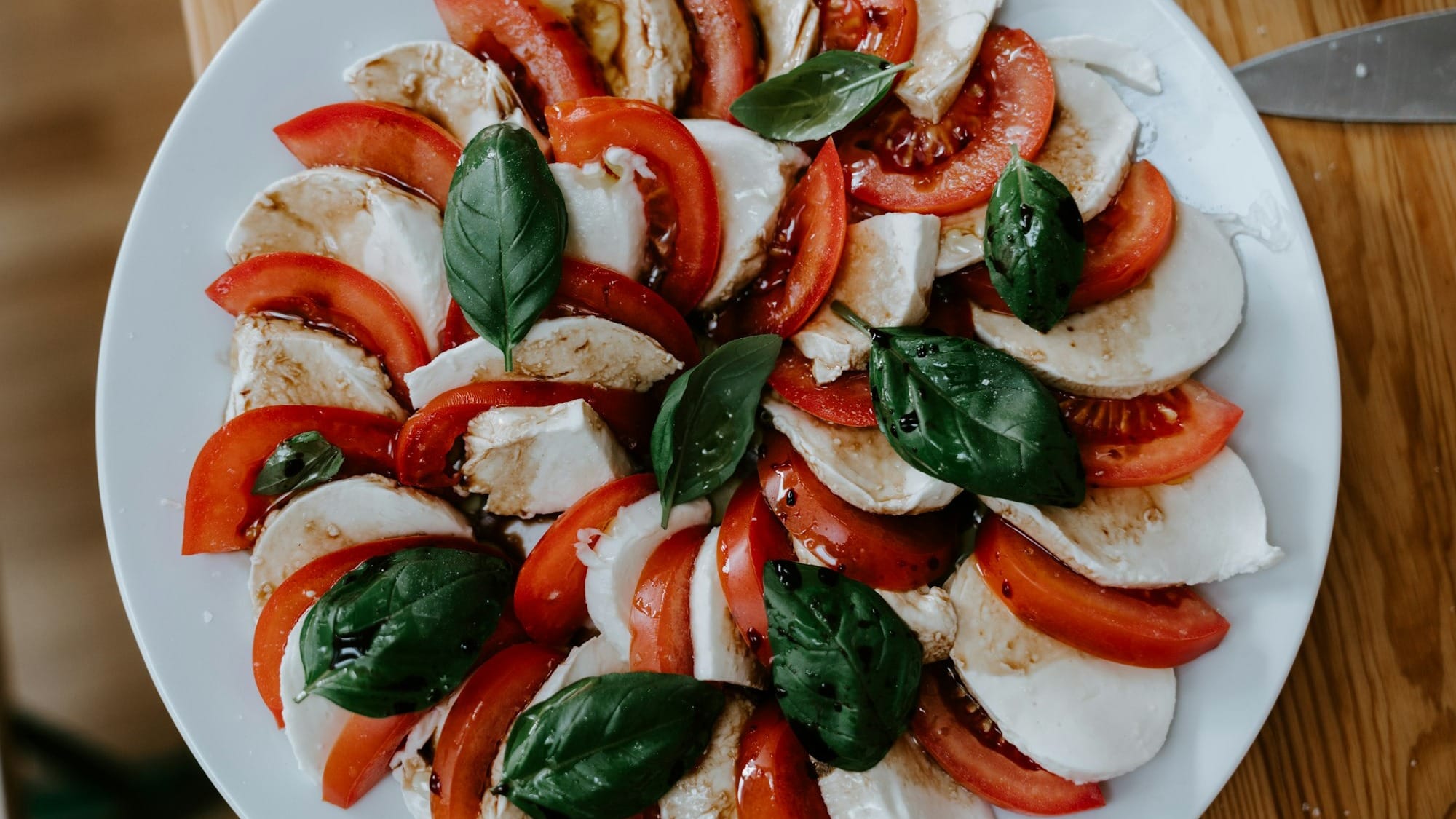
“Insalata tricolore” is Italy's patriotic salad. It’s a simple arrangement of tomatoes, mozzarella, and basil that mirrors the red, white, and green of the Italian flag. Also known as Caprese salad (with avocado) after the island of Capri, where it allegedly originated.
It represents the Italian philosophy that when produce is perfect, the cook's job is simply not to interfere.
The fresh mozzarella provides protein and calcium, and the tomatoes provide fibre and vitamin C. It’s only a few ingredients, so it demands peak summer tomatoes and good quality fresh mozzarella; anything less diminishes its simple magic. Serve as an “antipasto”, light lunch, or side dish alongside grilled meats or fish.
- Serves: 4-6
- Time: 10 minutes
- Cost: ~$1 per serving
- Calories: ~340 kcal per serving
- Source of: Protein, Calcium, Vitamin A, C, K
Ingredients
- 4 large high-quality ripe tomatoes (e.g., heirloom or beefsteak)
- 2 balls (250g/9 oz) fresh buffalo mozzarella or “fior di latte”
- Large handful of fresh basil leaves
- 80ml (⅓ cup) extra-virgin olive oil
- Flaky sea salt (for texture) and black pepper
Instructions
- Use tomatoes at room temperature — never refrigerated, which destroys their flavour and texture. Slice them thickly, about 1 cm (½ inch), removing the core. Arrange them on a large platter, slightly overlapping, and season immediately with flaky salt. This draws out their liquid and intensifies their flavour
- Drain the mozzarella and pat it dry gently with paper towels; too much moisture will dilute the dressing. Slice into rounds roughly the same thickness as the tomatoes. Fresh mozzarella should be milky-white, tender, and slightly springy, never rubbery.
- Tuck the mozzarella slices between and around the tomato slices, creating an alternating pattern (optional). The key is balance, ensuring each bite captures both elements (tomato and cheese).
- Tear the basil leaves by hand rather than cutting them. A blunt knife bruises the delicate leaves and causes them to go black. Scatter the torn basil generously over the tomatoes and mozzarella, tucking some leaves underneath for visual interest.
- Drizzle extra-virgin olive oil over everything. The oil should pool slightly around the tomatoes, mixing with their released juices to create a natural dressing. Finish with freshly cracked black pepper and an additional pinch of flaky salt over the mozzarella.
- Let the salad rest for 5–10 minutes before serving to allow the flavours to harmonise. This brief rest lets the salt work its magic on the tomatoes, and the olive oil coats everything evenly. Serve with crusty bread to soak up the precious juices that collect on the platter.
4. Tabbouleh
This quinoa tabbouleh is a Mediterranean adaptation of the Levantine herb salad, substituting traditional bulgur wheat with protein-rich quinoa from the Andes (although you are free to keep the original). The dish is a celebration of fresh herbs, lemon, and vegetables while offering a gluten-free alternative.
Quinoa provides high-quality protein along with iron, magnesium, and fibre, while the herbs deliver vitamins A, C, K and antioxidants. Serve as a light lunch, side dish, or part of a meze spread alongside hummus and warm flatbread for a plant-based meal.
- Serves: 4-6
- Time: 1 hour
- Cost: ~$0.75 per serving
- Calories: 280 kcal per serving
- Source of: Fibre, Iron, Vitamin A, C, B9, K
Ingredients
- 150g (¾ cup) quinoa, rinsed well
- 300ml (1¼ cups) water
- 3 large bunches flat-leaf parsley (about 150g/5 oz), finely chopped
- 1 bunch fresh mint (about 30g/1 oz), finely chopped
- 4 ripe tomatoes, finely diced
- 1 cucumber, finely diced
- 4 spring onions, finely sliced
- Juice of 2 lemons
- 100ml (scant ½ cup) extra-virgin olive oil
- 1 tsp ground cumin
Instructions
- Rinse the quinoa under cold running water in a fine-mesh sieve; this removes the natural bitter coating called saponin. Place in a small pot with the water, bring to a boil, then reduce the heat to low, cover, and simmer for 12–15 minutes until the water is absorbed, and the quinoa is tender.
- Remove from heat and let stand covered for 5 minutes, then fluff with a fork and spread on a large plate or tray to cool completely. Cooling the quinoa prevents it from wilting the herbs and making the salad soggy; room-temperature quinoa is essential.
- While the quinoa cools, wash and dry the parsley and mint (excess water will dilute the dressing). Remove the tough stems and chop the leaves finely.
- In a large bowl, combine the cooled quinoa, chopped herbs, tomatoes, cucumber, and spring onions. The vegetables should be cut into small, uniform pieces.
- In a small bowl, whisk together the lemon juice, extra-virgin olive oil, cumin, salt, and pepper until emulsified. Pour the dressing over the salad and toss gently but thoroughly, ensuring everything is evenly coated. Taste and adjust seasoning—tabbouleh often needs more lemon juice and salt than you expect. The flavours should be bold and vibrant.
- Let the salad rest for at least 20 minutes before serving, allowing the quinoa to absorb the dressing and the flavours to mix. Tabbouleh is best served at room temperature or slightly chilled, and improves over a few hours. It keeps refrigerated for 2 days, though you may need to refresh it with extra lemon juice and extra-virgin olive oil before serving.
5. Salad Niçoise
Salade Niçoise is the jewel of Provence. It’s a salad from the sun-drenched port of Nice that typifies the French Riviera's approach to summer eating. This is not a tossed salad but an arrangement of vegetables, tuna, eggs, and olives that celebrates each ingredient's individuality.
Purists debate its exact composition—cooked vegetables or raw? Potatoes or not? But all agree it must showcase the region's finest produce.
The tuna provides lean protein and omega-3 fatty acids that support heart and brain health. And the green beans are a good source of vitamin C and K. This salad is a complete, balanced meal that requires no cooking beyond boiling eggs and beans, which can be done in advance.
- Serves: 4
- Time: 30 minutes
- Cost: ~$1.50 per serving
- Calories: 480 kcal per serving
- Source of: Protein, Fibre, Selenium, Omega-3, Vitamin A, B9, C