Visceral Fat & Health: Not All Fat is Created Equal
Visceral fat is stored around organs. Internal fat is metabolically active and releases substances that are bad for your cardiometabolic health.

- Visceral fat is stored around organs. It is metabolically active and releases substances that are devastating for your cardiometabolic health.
- People with normal body weight can still have high levels of visceral belly fat. Overweight people can actually have normal amounts of it as well.
- You can't "spot-burn" visceral fat, but there are dietary, nutritional, and exercise interventions that you can do to reduce it.
Not all body fat is created equal. There are healthy types and healthy amounts of body fat. And there are unhealthy amounts and unhealthy types of body fat. And there are also less unhealthy types of fat (i.e., not great for your health, but it could be worse). The amount of each type of fat and where it is located in the body can be critical for your health and future fat loss prospects.
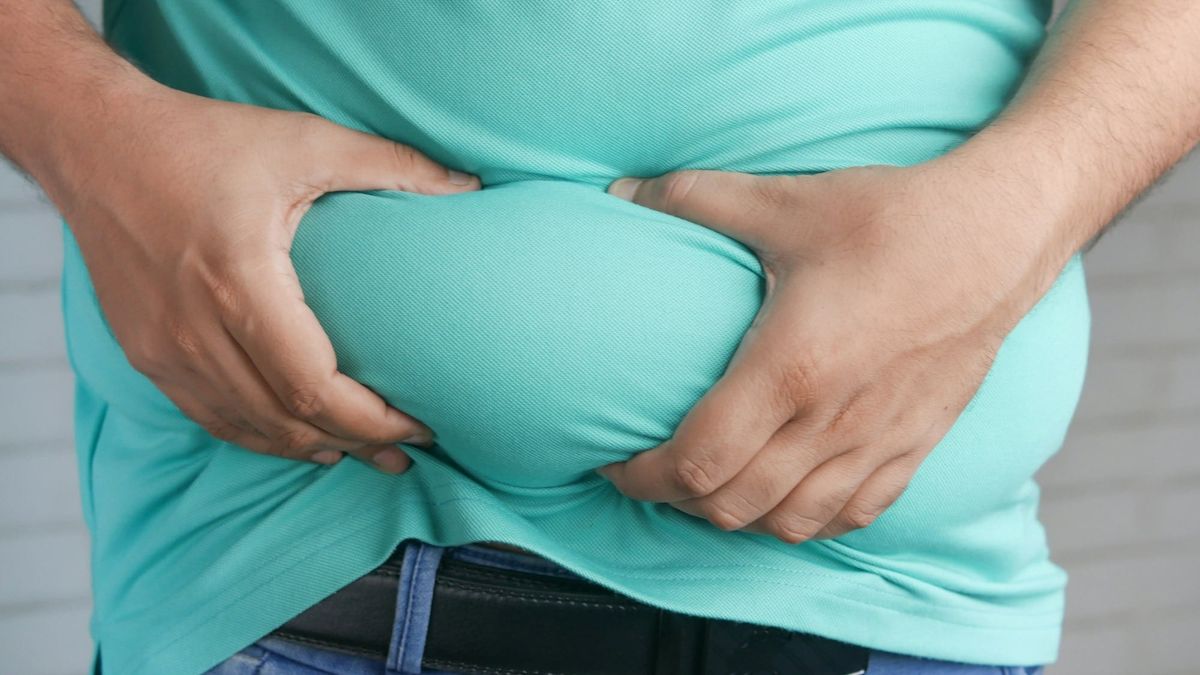
“Visceral” fat is the deep abdominal fat that surrounds your internal organs. It poses significantly greater health risks than the “subcutaneous” fat does (i.e., that fat you can pinch under your skin).
Internal fat vs. external fat: visceral vs subcutaneous fat
Visceral fat, technically referred to as “visceral adipose tissue”, is stored within the abdominal cavity of your body. It wraps around organs such as your liver, pancreas, and intestines. Whereas the "subcutaneous adipose tissue" lies directly beneath the skin and serves mainly as energy storage and insulating material.
Visceral fat is more metabolically active, but not in a good way: it releases fat, inflammatory molecules and hormones directly into your bloodstream. These differences between visceral fat and subcutaneous fat explain why two people with similar body weights and the same amount of “fat tissue” can have completely different metabolic health prospects.[1]
You can carry significant visceral fat even if you appear relatively lean. “Skinny fat” is a term that’s used when someone is of normal body weight but has a large amount of fat. We tend to see this a lot with older people and inactive women, where the negative health impact is exacerbated by the fact that they also have a low amount of healthy muscle tissue.
This means that some people can have a perfectly normal body size, body weight, and BMI, but underneath the bonnet, they're carrying too much fat (visceral and/or subcutaneous). Conversely, some people who appear to have higher body fat may actually have relatively low amounts of visceral fat. This highlights why body weight alone (and BMI) is not always a good measure of health.[1]
How visceral fat affects your health
Large amounts of visceral fat dramatically increase your risk of several serious diseases (e.g., diabetes, cardiovascular disease, metabolic disease, and inflammatory conditions) irrespective of your body weight.
It also promotes “insulin resistance” by releasing fat into your bloodstream. This disrupts liver function and leads to "ectopic" liver fat or non-alcoholic “fatty liver disease”. In turn, this means your liver struggles to control your blood sugar, blood pressure, and body fat levels and increases the risk of cardiovascular disease.
These conditions, where several of your body's processes simultaneously start to fail, are so common that they've been given their own name: “metabolic syndrome”, which is tied to obesity and high levels of visceral fat. The closer your fat is stored to these vital organs, the greater its potential to disrupt their normal functions.[1]
How to measure visceral belly fat
The gold standard for measuring visceral fat is imaging techniques like CT, DEXA or MRI scans, but these are expensive and impractical for routine monitoring. Fortunately, waist circumference can provide a good, reliable proxy measure. Research indicates that a waist circumference exceeding 102 cm (40 inches) for men and 88 cm (35 inches) for women indicates that you have high visceral fat.
To measure your waist circumference correctly:
- Place a tape measure around your natural waist (i.e., the narrowest point about halfway between your lowest rib and the top of your hip bone).
- Do this whilst standing and breathing normally. Avoid the common mistake of measuring at the widest part of your hips or pulling the tape too tight.
- Track this measurement monthly along with body weight for a more accurate assessment of how much fat you're losing.
- It is best to take both these measures at the same time, first thing in the morning, before eating or drinking anything.
Waist-to-height ratio can also be used, and is actually more accurate. Having a waist measurement over half of your height is a common cut-off for increased risk of disease and normal amounts of body fat. “Keep your waist to less than half your height” is a simple and effective way to think about your body fat levels.
How to reduce visceral fat: Exercise
Despite popular belief, abdominal exercises alone are not an effective strategy to directly burn visceral fat. Movements such as sit-ups, planks, or leg raises primarily strengthen and build the abdominal muscles beneath the fat layer; they do not selectively burn visceral fat.[2]
Getting rid of visceral fat is mainly determined by energy balance, genetics, and your hormones. Whilst there’s some research suggesting that localised “spot” exercise may produce small but measurable reductions in nearby subcutaneous fat, it is controversial and less impactful than fat loss achieved through diet and whole-body exercises.[3]
However, you can “spot increase” or “tone” the muscles in a specific area, which may improve firmness, posture, or appearance. This effect can sometimes create the impression of fat loss. Current evidence shows that both diet and various types of exercise (resistance, aerobic, and particularly high-intensity exercise) can effectively reduce visceral fat, but the decreases in subcutaneous fat are often larger.[4][5][6]
How to get rid of visceral fat: Diet
Beyond calorie control, specific dietary patterns can influence visceral fat. Healthy, nutritious diets can reduce visceral fat. The Mediterranean-style diet is particularly effective in reducing visceral fat.[7]


Limited alcohol consumption is also generally advised, as excess intake preferentially promotes visceral fat storage. If you drink alcohol, it is advised to restrict intake to no more than 1–2 drinks per day for men and one drink per day for women. Because of the excess calories from alcohol and its effects on your liver, you may consider tracking or eliminating it. Many people underestimate their actual alcohol consumption, which can derail visceral fat loss efforts.
Sources
- Wajchenberg BL. Subcutaneous and visceral adipose tissue: their relation to the metabolic syndrome. Endocr Rev. 2000 Dec;21(6):697-738. PMID: 11133069
- Brobakken MF et al. Abdominal aerobic endurance exercise reveals spot reduction exists: A randomized controlled trial. Physiol Rep. 2023 Nov;11(22):e15853. PMID: 38010201
- Kostek MA et al. Subcutaneous fat alterations resulting from an upper-body resistance training program. Med Sci Sports Exerc. 2007 Jul;39(7):1177-85. PMID: 17596787
- Lopez P et al. Resistance training effectiveness on body composition and body weight outcomes in individuals with overweight and obesity across the lifespan: A systematic review and meta-analysis. Obes Rev. 2022 May;23(5):e13428. PMID: 35191588
- Vissers D et al. The effect of exercise on visceral adipose tissue in overweight adults: a systematic review and meta-analysis. PLoS One. 2013;8(2):e56415. PMID: 23409182
- Merlotti C et al. Subcutaneous fat loss is greater than visceral fat loss with diet and exercise, weight-loss promoting drugs and bariatric surgery: a critical review and meta-analysis. Int J Obes (Lond). 2017 May;41(5):672-682. PMID: 28148928
- Romaguera D et al. Adherence to the Mediterranean diet is associated with lower abdominal adiposity in European men and women. J Nutr. 2009 Sep;139(9):1728-37. PMID: 19571036