5 Ways to Fix the Western Diet
If you can add these five simple habits to your weekly routine, you can bring your diet close to the healthy Mediterranean-style diet.

Across the "West", life expectancy and healthy life expectancy are stalling, and in some cases getting worse. A lot of this has been attributed to the Western diet, which is the most common eating pattern of the people in North America, Europe and Australia. It is also increasing in urban areas all around the world.[1][2][3][4]
The Western diet is based on ultra-processed foods, red meat and processed meats, refined grains, sugars, unhealthy fats, alcohol and sugary drinks. It has been linked to several health conditions: all the most common ones and all the bigger killers (i.e., cardiometabolic diseases, obesity, metabolic syndrome, dementias, gut problems, cancer and poor mental health).[1][2][3][4]
The modern iteration of the Western diet is probably one of today’s most significant challenges for public health. But it wasn't always like this. In fact, we think it is one of the easiest (and cheapest) things to fix.
Diagnosing the nutritional problem
Although there is no standard Western diet to analyse, studies have identified several common nutrient "gaps" and "excesses" in people from Western countries. They are:
- Too much: ultra-processed food, calories, dietary fat, saturated fat, sodium, added sugar, refined grains and animal foods.
- Too little: dietary fibre, vitamin D, omega-3 fatty acids, magnesium, calcium, potassium, fruit and vegetables. Also, iron and folate for women.
Sources: [5][6][7][8][9][10][11][12]
How to fix the problems with the Western diet
The Western countries aren't short of health organisations, government health interventions, dietary advice, top scientists, nutritionists or public communication channels.
So, what's gone wrong? It's really a trillion-dollar question; once you add the upfront health costs, welfare costs, the life years, healthy life years, and all working life years lost across the West.
We believe that a significant portion of the problem lies in the fact that most advice available is overly complicated. Every month, there are new headlines, position statements, guidelines, food labelling systems, recommendations, reference values, reference intakes, plates and pyramids.
Add to this the mixed messaging: track your calories, macros, micros, superfoods, eat your 5 a day, eliminate sugar, eliminate meat, eliminate eggs, eliminate carbs, eliminate fat, eliminate processed food, eliminate cooked food, eliminate gluten, and eliminate dairy; it goes on and on.
It is all too much, and it has all failed. Look at the real-world results. People are busy, people run out of money, people hate cooking, people like tasty food, and people tend to slide back into old habits.
The ultra-processed food companies get it; a lot (but not all!) of the health scientists, nutritionists and politicians don't. It doesn't matter how sophisticated, accurate, or good the marketing is; if the recommendations aren't followed, they have zero use.
Look at the history of the 5 a day campaign. After 40 years of pushing it, millions spent on marketing, and 90% of adults are aware of the advice. However, 83% of adults and 91% of children still don't follow it. Fruit and vegetable intake is at an all-time low. The scientists have now also changed their minds, and the advice is considered to be out of date.[9]
Turns out that you actually need to consume more than your 5 a day. What a waste of time and money.[13]
Methods: How we arrived at our recommendations
To solve this problem, we designed a different approach.
- Identify the dietary gaps and excess consumption for both individual nutrients and food groups.
- Screened potential solutions through a "return on intervention" ("ROI") filter, based on.
- Nutrition: Does this food solve a specific nutritional problem with the Western diet?
- Friction: Is it cheap, accessible, edible, sustainable, has a long shelf life, and quick and easy to eat?
- "Forward" selection: What are the additional benefits of the recommendation, over and above the other ones?
Using this, we have come up with 5 recommendations, which are ordered by "ROI", from highest to lowest (most nutrition for least friction first). So, start with recommendation 1 and work towards doing all 5 if you can. If you can add these five simple habits to your weekly routine, you can bring your diet close to the Western equivalent of a gold-standard Mediterranean-style diet.
Recommendations
1. Eat oats for breakfast, as often as possible
Traditionally, most people in Western countries ate oats for breakfast on most days. This was before sugary breakfast cereals, pain au chocolat, doughnuts and coffee, industrially produced white bread, and toasters became kitchen or take-out staples.
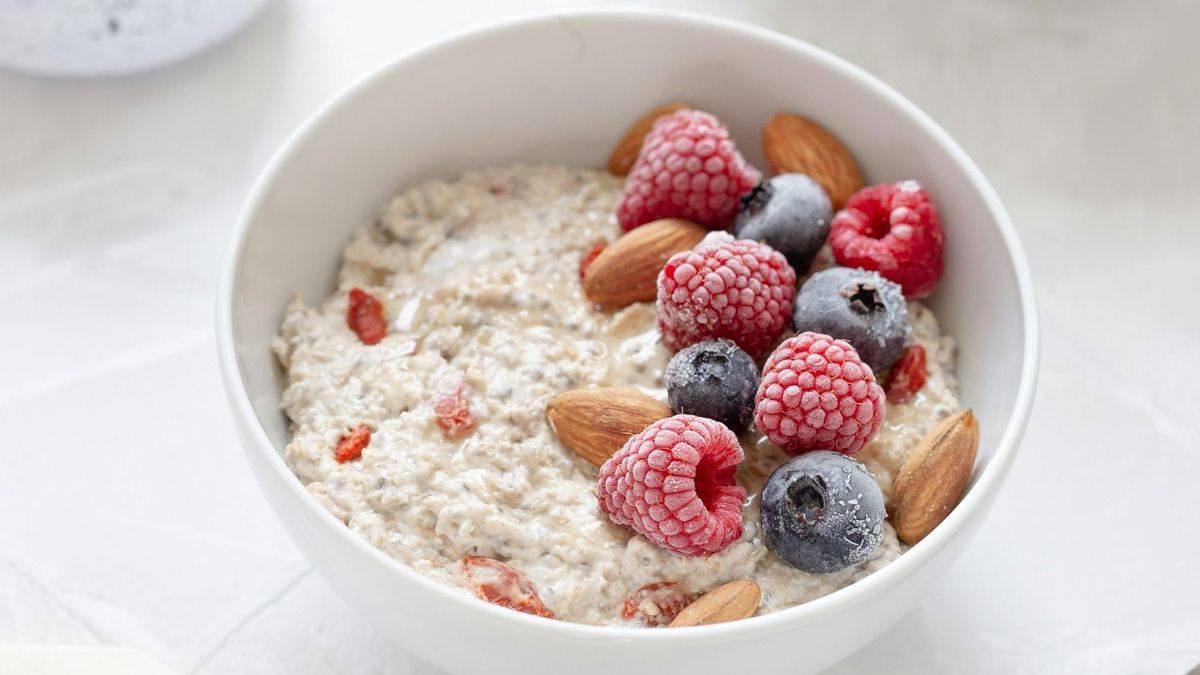
It doesn't matter whether the oats are hot, cold, microwaved, overnight, rolled, steel-cut, or diamond cut. Just eat them for breakfast every day, or as often as you can. They take minutes to prepare, whether you're cooking for 1 or 10 people, and they cost pennies per serving.
We have rated this at number one because breakfast is the easiest meal of the day to "automate" and make into a habit. Nutritionally speaking, Western breakfasts are also one of the worst offenders: they're usually ultra-processed, sugary and calorie-dense.
Oats contain a lot of soluble fibre. And a lot of a unique type of soluble fibre called "beta-glucan", which lowers bad LDL cholesterol. When you eat oats, they form a gel-like mass in your digestive system, slowing down stomach emptying and absorption into your bloodstream. This means flatter blood sugar or insulin spikes even if you eat them with other carbohydrates or sugars.[14][15]
Oats have also been linked to good gut health, immunity, gluten-free status, and have anti-cancer and anti-inflammatory properties. They're one of the healthiest carbohydrates around.[16]
 Dr. Robert Davies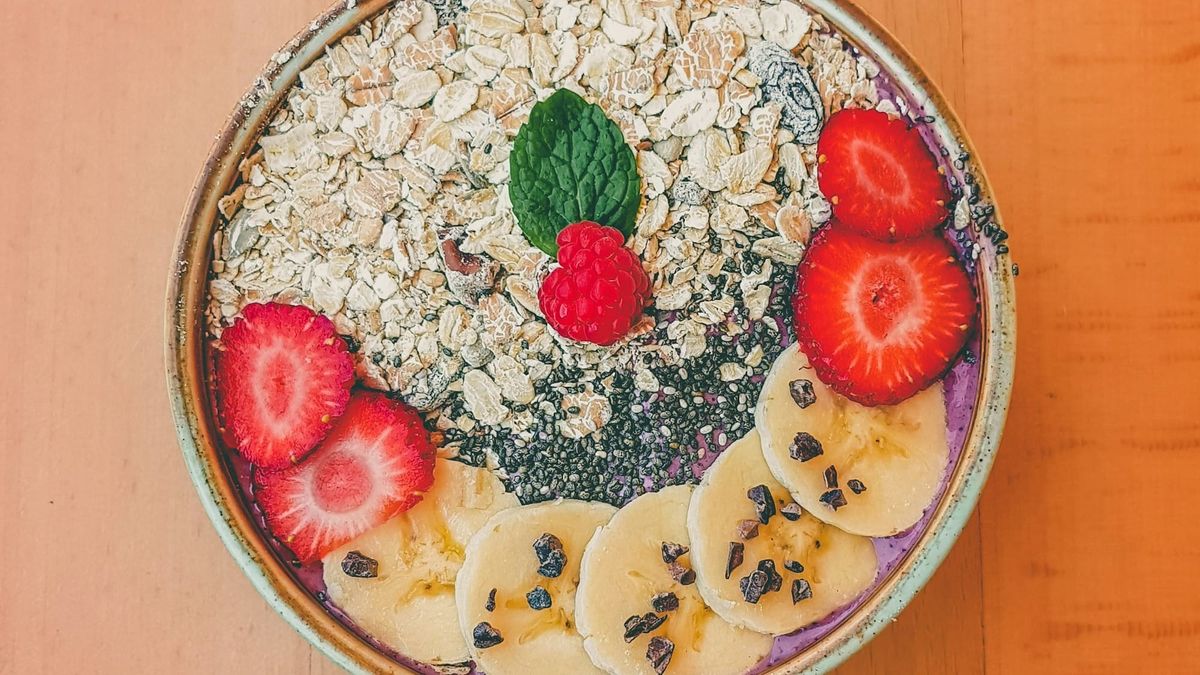
2. Add 1 can of legumes to your weekly shop
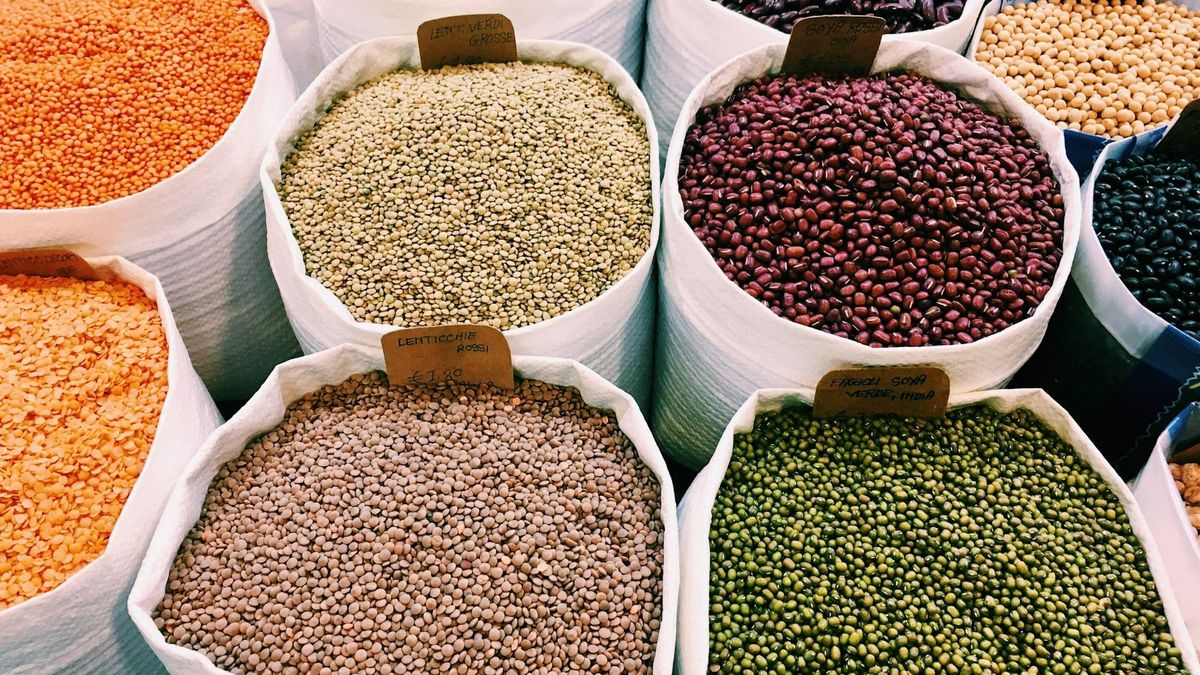
Buy exactly one standard can (400g / 15 oz) of chickpeas, lentils, black beans, kidney beans or whatever local legumes are available every week. You do not need to cook them from scratch.
Simply open the tin, rinse them in a colander, and eat them throughout the week. Put them into bolognese sauce, taco meat or chilli. Add them to soups, stews or salads. Mash them into a puree (with other flavourings) and spread them on bread or toast.
They are number 2 on our list, as they address several nutritional deficiencies in the Western diet. They contain a lot of fibre, magnesium, potassium, protein, lysine, low-GI carbohydrate, folate and non-heme iron. Because of the last two nutrients, they may even be ranked number 1 for women and girls.
They are probably the most nutritious food per dollar on the planet. They are also great for the environment (natural fertilisers), so eating more of them will increase food security in your region.[17]
One can provides around 3 servings (~80 g serving) of legumes for pennies, which is around what you should be eating (3 servings a week). Intake of legumes has been associated with prevention and treatment of many chronic diseases, including type 2 diabetes, cardiovascular diseases, obesity, inflammatory diseases and cancer.[18]
Adding them to your diet can lower your cholesterol, LDL levels and triglyceride levels, blood sugar and insulin levels, blood pressure, and body weight. They're also great for gut health and gut function, containing resistant starch and soluble fibre.[19]
 Dr. Robert Davies