Volumetrics Diet: A Review
A satiety-focused eating strategy built around food volume and energy density rather than strict restriction.

- The volumetrics diet is based on eating foods that are "low-energy density": more food for fewer calories.
- The diet is safe and effective at managing hunger, helping with sustainable weight loss, which requires less willpower.
- Increased intake in low-energy dense foods (e.g., fruits and vegetables) will improve health outcomes, but may not be suitable for everyone.
Unlike most popular diets, the “volumetrics” diet (or “low-energy-density” diet) does not ban food groups or set rigid macronutrient or calorie targets. Instead, it is built around a single basic principle: eat more food for fewer calories.
The key concept behind it is “energy density”, which is the number of calories per gram of food. You’ll probably see it reported on food labels and on nutrition databases as kcal per 100g. Very low “energy-dense” foods are typically defined as having less than 150 calories per 100 grams of food.
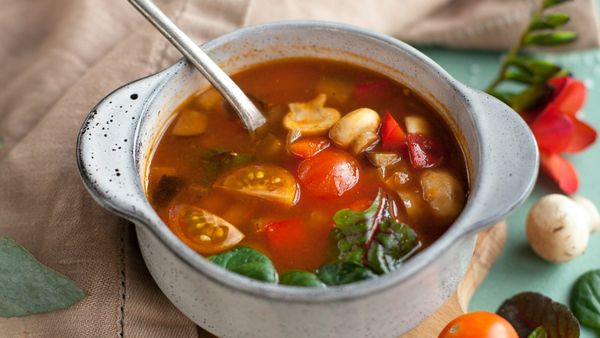
Watery foods like fruits, vegetables, soups, and stews have very low energy density, meaning you can eat a large volume of them without consuming many calories. Dry, processed, or high-fat foods have high energy density (i.e., a small amount of food delivers a lot of calories).
By eating a lot of low-energy-density foods, the volumetric diet is based on the theory that this allows you to eat larger, more satisfying portions that make you feel “full”. This means you can eat fewer calories but without the restrictions and hunger that accompany other diets.
To follow the diet, foods are grouped into four categories by energy density: very low (fruits, vegetables, broths), low (whole grains, lean protein, legumes), medium (meats, cheese, some breads), and high (nuts, oils, sweets, crisps). The diet doesn't prohibit higher-density foods but encourages you to base meals around the first two categories and eat the others in moderation.
Example foods and dishes
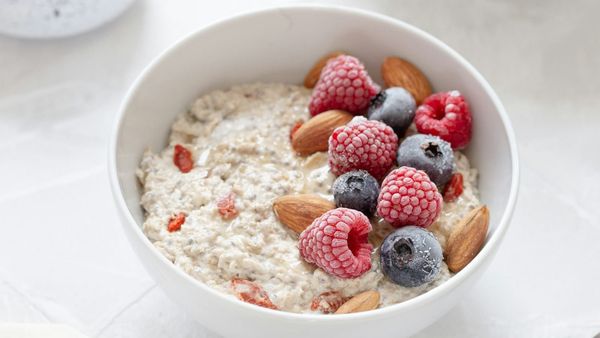
- Breakfast: Porridge with skimmed milk, sliced strawberries, and blueberries or Mixed vegetable omelette with whole-grain toast
- Lunch: Big mixed salad with grilled chicken, cucumber, tomatoes, and a light vinaigrette or Chunky vegetable and lentil soup with a wholemeal roll
- Snack: Sliced apple, celery sticks, and a small pot of hummus
- Dinner: Baked cod with roast Mediterranean vegetables and brown rice or Turkey mince stir-fry with broccoli, pak choi, peppers, and noodles
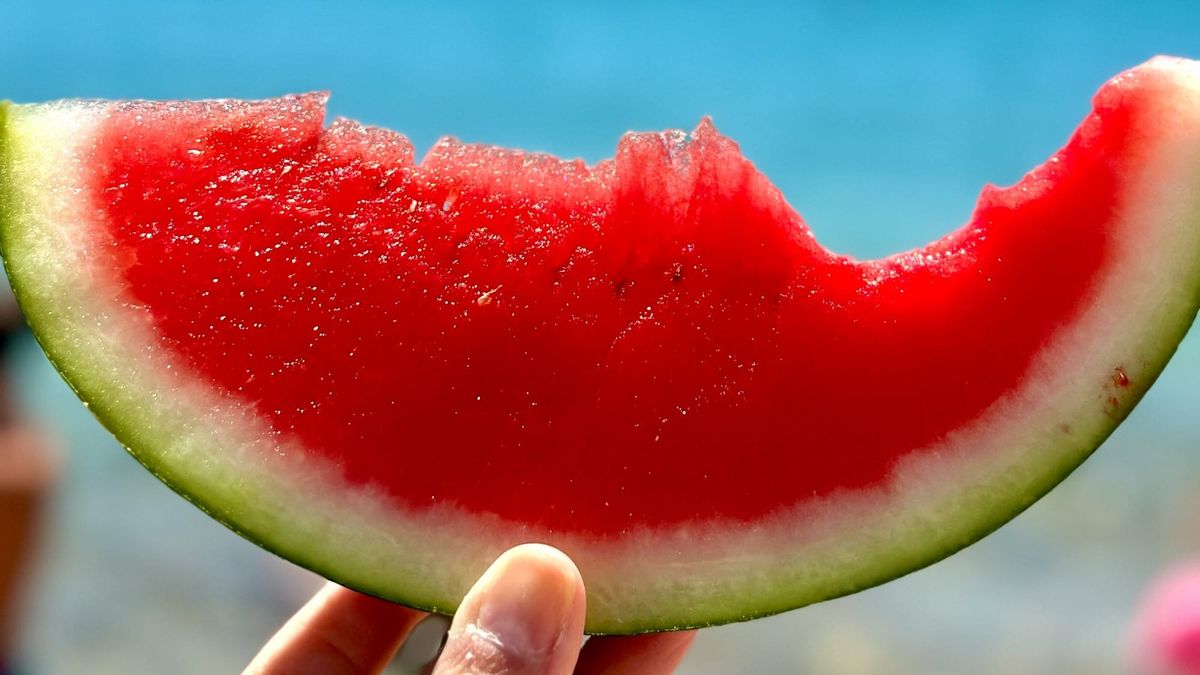
- Dessert: Lime marinated watermelon and berry fruit salad
- Drinks: Water, sparkling water with lemon, herbal tea, black coffee
Pros
The volumetrics diet's main edge over other diets is its approach to hunger, or at least the recognition of it; rather than delegating it to willpower. Most calorie-restricted diets work by asking people to eat less. Whereas volumetrics works by helping people eat more of the right things.
Research shows that adding water-rich fruits and vegetables to a reduced-fat diet (thus reducing its energy density) produced greater weight loss, fat loss, and less hunger compared to a low-fat diet alone. This is a meaningful finding: too much hunger is the main reason most diets fail.
From a nutritional standpoint, the diet is great, naturally steering people towards eating plants, whole grains and lean protein sources. No specific food groups are prohibited; the diet has a balanced macronutrient profile, and the high-fibre and water content of the diet is good for digestive health.
The diet is also flexible, affordable, and pretty practical: building meals and snacks around vegetables and whole grains doesn’t require any specialist or expensive ingredients, equipment or subscriptions.
Cons
The primary limitation of the diet is the breadth and depth of its evidence base compared to some other (better researched) diets (e.g., Mediterranean diet). While the underlying theory, that energy density controls satiety and body weight, is well-supported, the body of evidence specifically testing the diet is relatively small.
That said, there is strong evidence showing that adding low-energy-dense foods (e.g., fruit and vegetables) to your diet is beneficial for weight loss and general health.
If you’re fully adopting the diet, you’ll have to change how you create your meals. Energy-dense foods need to be replaced with high-volume watery substitutes. So, some cooking skills, meal planning and budgeting are required. People who have little time and cooking skills may find it more difficult than simpler, rule-based diets (e.g., intermittent fasting).
Finally, like all dietary approaches, results depend on consistent application. The diet does not enforce strict calorie limits, which gives it flexibility but also means it is easy to miscalculate the energy content of moderate- and high-density foods eaten alongside less dense options.
Bottom Line
Volumetrics is one of the most logical, scientific and practical dietary approaches around. Its focus on managing hunger rather than restrictions and willpower sets it apart from most other weight-loss diets, and its nutritional profile is generally better.
Rather than an “all-in” volumetrics approach to dieting, we believe that simply factoring in “energy-density” when choosing what to eat will yield good results for (relatively) little effort.
The full diet won't suit everyone as it requires a meaningful increase in fruit and vegetable intake and some willingness to cook. But for people looking for a sustainable, evidence-based approach to weight loss or maintaining a healthy bodyweight, which does not demand deprivation, it is a strong choice.
Overall Score: ★★★★☆
- Health Benefits: ★★★★☆
- Nutrition: ★★★★☆
- Weight Control: ★★★★★
- Ease to Follow: ★★★★☆
- Safety Profile: ★★★★★
- Scoring System
Sources
Chao, AM et al. (2021). Dietary interventions for obesity: clinical and mechanistic findings. Journal of Clinical Investigation, 131(1). PMID: 33393504
Cloos, A et al. (2025). Similar body composition outcomes following volumetric diet and time-restricted eating in middle-aged individuals: a 12-week randomized controlled trial. Nutrition Journal, 24. PMID: 40533752
Duncan KH et al. The effects of high and low energy density diets on satiety, energy intake, and eating time of obese and nonobese subjects. Am J Clin Nutr. 1983 May;37(5):763-7. PMID: 6303104
Ello-Martin, JA et al. (2007). Dietary energy density in the treatment of obesity: a year-long trial comparing 2 weight-loss diets. American Journal of Clinical Nutrition, 85(6), 1465–1477. PMID: 17556681
Ledikwe JH et al. Reductions in dietary energy density are associated with weight loss in overweight and obese participants in the PREMIER trial. Am J Clin Nutr. 2007 May;85(5):1212-21. PMID: 17490955
Robinson E et al. Calorie reformulation: a systematic review and meta-analysis examining the effect of manipulating food energy density on daily energy intake. Int J Behav Nutr Phys Act. 2022 Apr 22;19(1):48. PMID: 35459185
Rolls, BJ. (2009). The relationship between dietary energy density and energy intake. Physiology & Behavior, 97(5), 609–615. PMID: 19303887