The Half-Plate Rule: The Simplest Way to Eat More Vegetables
Learn the half-plate rule for eating more vegetables with three filling recipes to help you meet daily vegetable targets.

- Each additional daily serving of vegetables reduces disease risk by around 10%, with benefits rising to 800g (10 servings) per day.
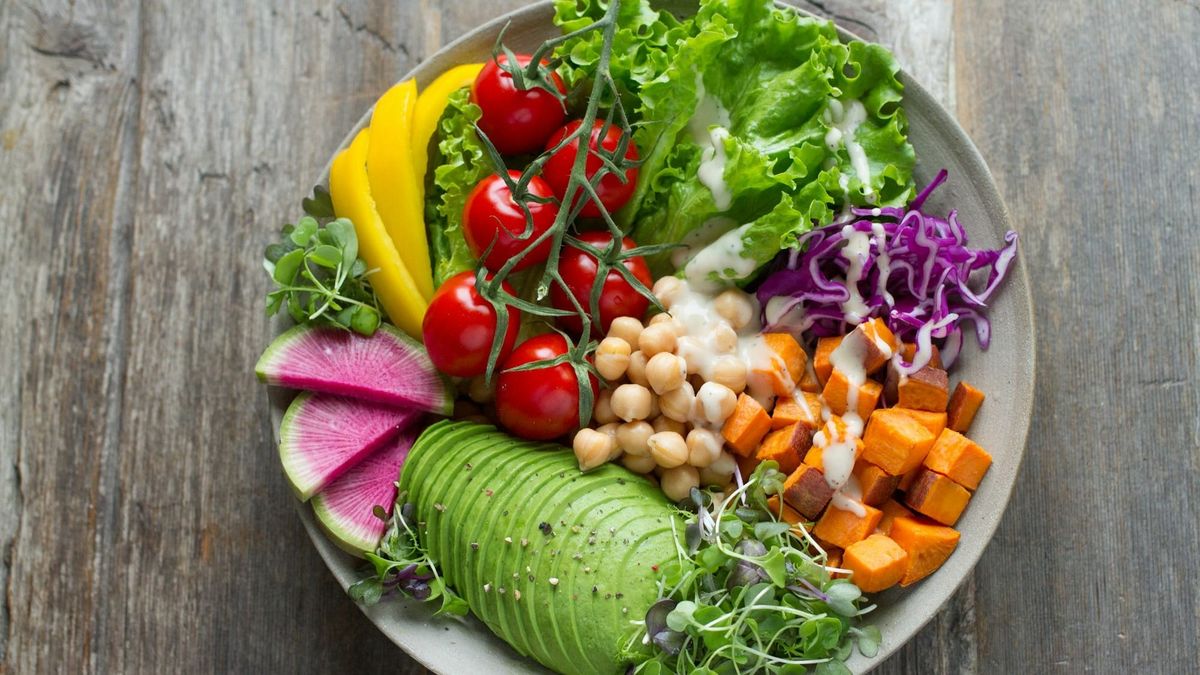
- The "half-plate rule": filling half your plate with non-starchy vegetables, is an easy and simple way to increase vegetable intake.
- Roasting vegetables in olive oil improves both flavour and nutrient absorption. Batch-cook at the weekend and the hard part is already done.
Recommendations for vegetable portions focus on meeting nutritional needs and reducing disease risk. This article provides practical, evidence-based guidance on how much of your plate should be veggies.
Most people probably know they should eat more vegetables. But how much is enough? So, here is a simple rule to follow: half your plate at lunch and dinner should be vegetables.
Large-scale research on thousands of people has shown clear evidence that eating fruit and vegetables reduces cardiovascular disease, cancer and early death1.
The beneficial effects of eating vegetables increase with each additional serving, up to 800 grams per day — approximately 10 servings! That means doubling your 5 a day! Each extra serving of vegetables a day reduces disease risk by about 10%.
So, what's the problem? Most people eat fewer than two servings of vegetables a day. The ‘vegetable intake gap’ between what we actually eat and what we should eat helps explain the increase in some diseases.
It wasn't always like this. People used to eat a lot more vegetables than they do now. Vegetables have been crowded out by cheaper, less healthy, ultra-processed alternatives.
How many servings of vegetables per day? The half-plate rule
Rather than trying to count servings with scales and measuring cups, use a visual guide: fill half your plate with non-starchy vegetables at your two main meals each day. This approach is supported by nutrition research, making it easier to hit recommended intake levels without having to spend time measuring or tracking them2.
Fill the remaining plate space with a quarter of lean protein (fish, poultry, legumes, eggs) and the other quarter with wholegrain carbohydrates (brown rice, quinoa, wholegrain pasta, potatoes). This creates a balanced meal that's naturally lower in calories, keeping you fuller for longer.
Why does this work? The answer is that vegetables have very low energy density — meaning you can eat a large volume of them for relatively few calories. A full plate of roasted vegetables might contain 150 calories, whilst the same volume of pasta could contain 600 calories or more.
The high fibre and water content of vegetables also slows digestion, stabilises blood sugar, and triggers satiety signals that help prevent overeating.
How to eat more vegetables
The beauty of the half-plate rule is its simplicity. You don't need special equipment or complicated calculations. Start your meal prep by thinking about which vegetables you'll serve, then build the rest of the meal around them.
Cook vegetables in ways that make them genuinely appealing. Roasting can bring out their natural sweetness. Using extra virgin olive oil (before and/or after cooking them) enhances flavour and actually increases absorption of fat-soluble vitamins and some beneficial plant nutrients3. Season with garlic, herbs, and lemon juice if you aren’t fond of vegetables' natural flavours.
Batch cooking helps make this sustainable. Roast several trays of mixed vegetables on Sunday evening, and coat them in extra virgin olive oil. Then throughout the week, add them to grain bowls, toss them with pasta, layer them in sandwiches, or simply reheat them as an instant side dish.
Roasted Mediterranean vegetable platter
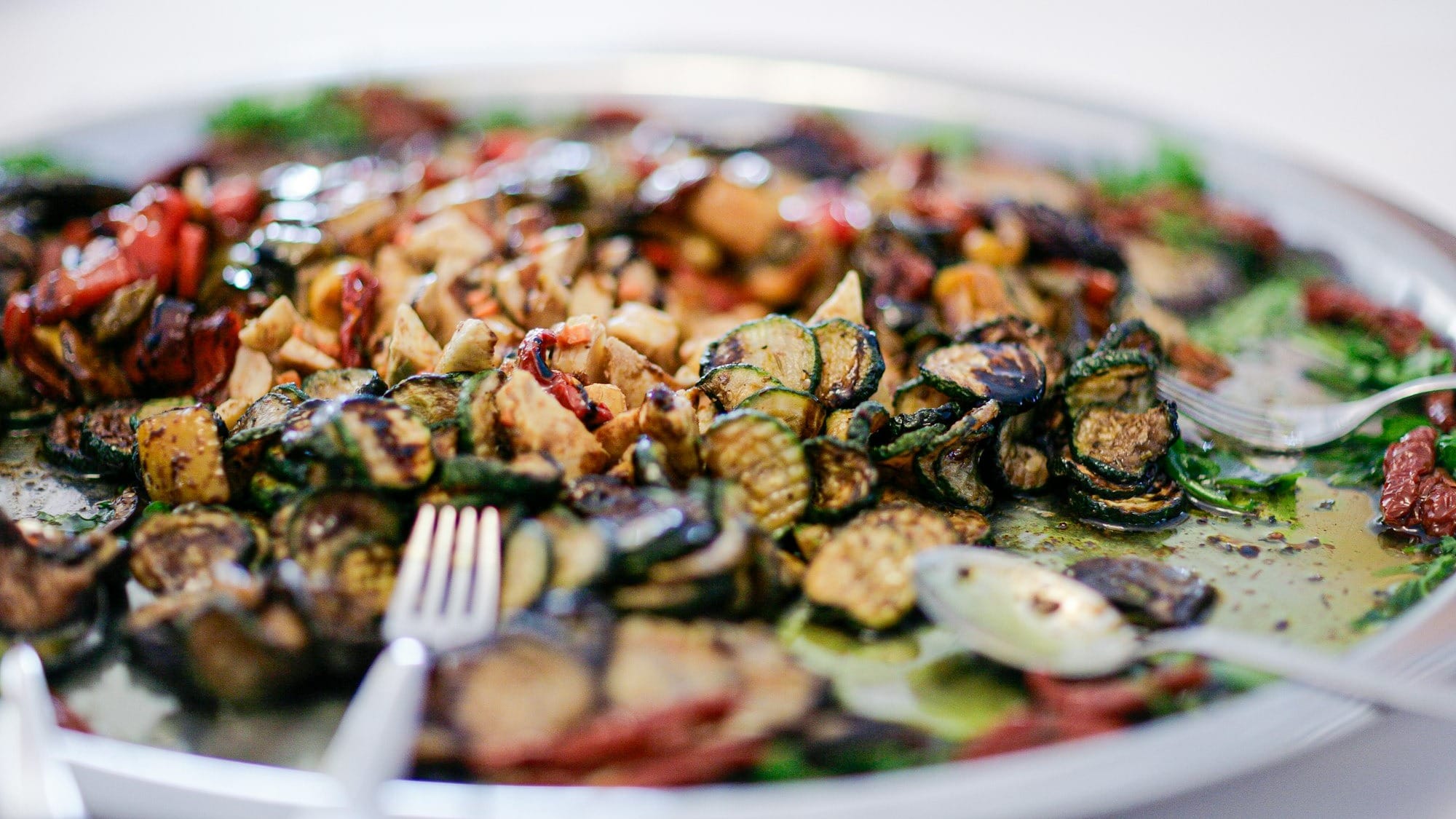
This is your foundation recipe — endlessly adaptable and always tasty. It has several regional variations: it is called Ratatouille in France, Briam in Greece, Pisto in Spain and Caponata in Italy. There is a reason why every country in the Mediterranean has their own name for it.
Ingredients
- Courgettes, aubergines, bell peppers (any colour), red onions, tomatoes
- 3-4 tbsp extra virgin olive oil
- 3-4 garlic cloves (crushed)
- 1 teaspoon dried oregano, fresh basil, salt and black pepper.
Directions
- Heat oven to 200°C (390°F).
- Chop vegetables into similar-sized chunks or circles.
- Toss with olive oil, garlic, oregano, salt, and pepper.
- Spread on two large baking trays — don't overcrowd. Roast for 35–40 minutes until golden, stirring halfway through.
- Tear over fresh basil before serving. Serves 4 as a main vegetable portion.
Mixed green salad with lemon dressing
A substantial salad that fills half your plate without sacrificing taste. Add chickpeas or white beans to make this a complete meal, or serve alongside grilled fish or chicken.
Ingredients
- Mixed salad leaves (rocket, spinach, watercress)
- ½ cucumber (diced)
- 10 cherry tomatoes (halved)
- 1 ripe avocado (sliced)
- A handful of fresh herbs (parsley, mint, dill)
- 2 tbsp extra virgin olive oil
- Juice of 1 lemon
- 1 garlic clove (puréed)
Directions
- Combine all salad vegetables in a large bowl.
- Whisk together olive oil, lemon juice, garlic, salt, and pepper.
- Pour over salad just before serving and toss well.
- Top with sliced avocado and torn herbs.
Sautéed greens and mushrooms
Ready in 10 minutes, serve with roast or seared meat. Goes especially well with lamb or beef.
Ingredients
- 300g (10 cups) mixed greens (kale, chard, or spinach — roughly chopped)
- 250g (9oz) mushrooms (sliced)
- 2 tbsp extra virgin olive oil
- 3 garlic cloves (sliced)
- 1 tsp chilli flakes (optional)
- A squeeze of lemon
Directions
- Heat olive oil in a large frying pan.
- Add mushrooms and cook for 5 minutes until golden.
- Add garlic and chilli flakes, cook for 1 minute.
- Add greens in batches, stirring until wilted.
- Season with salt, pepper, and lemon juice.
- The kale and chard need 5–7 minutes of cooking, and the spinach wilts in 2–3 minutes.
Action steps
Start with three days this week. For lunch and dinner, fill half your plate with vegetables before adding anything else. Notice how you feel — most people report feeling fuller, more energised, and less prone to afternoon slumps.
Keep pre-washed salad leaves, cherry tomatoes, and pre-cut vegetables in your fridge for quick assembly. Stock your freezer with frozen vegetables like broccoli, peas, and spinach — they are just as good as fresh vegetables.
The half-plate rule isn't about restriction. It's about abundance — filling your plate with colourful, flavourful vegetables that nourish your body whilst leaving you feeling full for fewer calories.
Sources
- Aune D et al. Fruit and vegetable intake and the risk of cardiovascular disease, total cancer and all-cause mortality-a systematic review and dose-response meta-analysis of prospective studies. Int J Epidemiol. 2017 Jun 1;46(3):1029-1056. PMID: 28338764
- Jia SS et al. The Use of Portion Control Plates to Promote Healthy Eating and Diet-Related Outcomes: A Scoping Review. Nutrients. 2022 Feb 20;14(4):892. PMID: 35215542
- Rinaldi de Alvarenga JF et al. Using Extra Virgin Olive Oil to Cook Vegetables Enhances Polyphenol and Carotenoid Extractability: A Study Applying the sofrito Technique. Molecules. 2019 Apr 19;24(8):1555. PMID: 31010212