MIND Diet: A Review
A hybrid of the Mediterranean and DASH diets, designed specifically to support long-term brain health.


- The MIND diet is designed to reduce cognitive decline and dementia risk by eating foods that are good for your brain health.
- Older adults who follow that diet tend to have slower cognitive decline, better memory, and lower rates of Alzheimer's disease.
- However, the diet has no advantage over other healthy diets, suggesting the overall health profile of the diet is the most important factor.
The “MIND” diet, short for “Mediterranean-DASH Intervention for Neurodegenerative Delay”. As the name suggests, it combines elements of two well-established healthy eating patterns: the Mediterranean diet and the “DASH diet” (Dietary Approaches to Stop Hypertension). The result is a dietary pattern specifically designed to support brain health.
The diet places particular emphasis on ten "brain-healthy" food groups: leafy green vegetables (at least 6 servings per week), all other non-starchy vegetables, berries, nuts, whole grains, beans and legumes, fish, poultry, and olive oil. At the same time, it limits five food groups considered harmful to brain health: red meat, butter and margarine, cheese, pastries and sweets, and fried or fast food.
Unlike more rigid diets, the MIND diet does not require calorie counting or the elimination of entire food groups. Its scoring system rewards consistency (i.e., how often you eat the right foods) rather than demanding perfection at every meal.
The rationale is that nutrients found in abundance in these foods (vitamin E, B vitamins, omega-3 fatty acids, and polyphenols) help protect the cells in your brain, reduce oxidative stress, and inflammation (which goes on to affect the brain).
Example Foods & Dishes
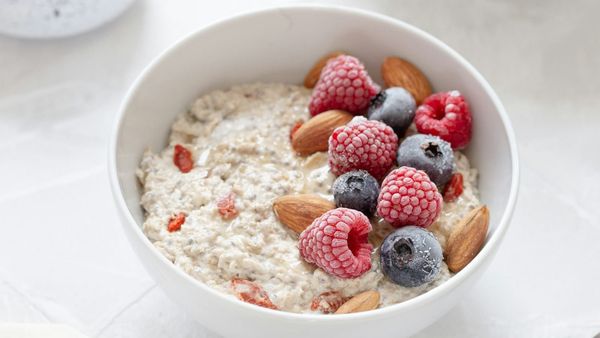
- Breakfast: Porridge with mixed berries, walnuts, and a drizzle of honey or Whole-grain toast with avocado, a poached egg, and sliced tomato
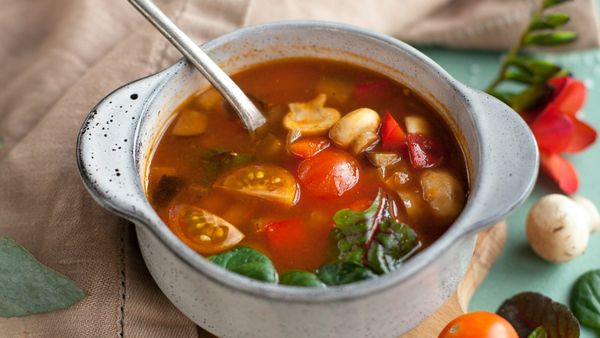
- Lunch: Leafy green salad with grilled chicken, olive oil dressing, and mixed seeds or Lentil and vegetable soup with whole-grain bread
- Snack: A small handful of almonds with a punnet of blueberries
- Dinner: Baked salmon with roasted sweet potato and steamed spinach or Chicken and vegetable stir-fry with brown rice and olive oil
- Dessert: Fresh berry compote with a spoonful of Greek yoghurt
- Drinks: Water, herbal tea, green tea, black coffee
Pros
Research shows that higher adherence to the MIND diet is associated with slower cognitive decline, better cognitive function and lower risk of dementias and Alzheimer's disease in older adults.
Some studies have reported that the MIND diet outperforms the Mediterranean or DASH diets alone. Lower rates of mental health issues (depression and distress), improved “cognition” (i.e., memory, attention and task performance), better mood and quality of life have also been reported.
Beyond cognition, the diet is linked to good cardiometabolic health: better blood lipids, lower blood pressure, inflammation, improved blood sugar control, and lower rates of cardiovascular disease and stroke. This makes sense, given that it is based upon two of the healthiest diets out there.
From a nutritional standpoint, the MIND diet is well-balanced and rich in nutrient-dense whole foods. It provides fibre, healthy fats, plant protein, and a broad array of vitamins and minerals. No major food groups are eliminated (but several unhealthy foods are), and there is little risk of nutrient deficiency when the diet is followed as intended.
Practical adherence is pretty good (comparably) — the diet is flexible, the foods are familiar to many people in Western countries, and it does not require expensive specialist foods or rigid meal timing.
Cons
The supporting evidence for its superior brain-health benefits claims is not always consistent. Some high-quality research has shown that a calorie-controlled MIND diet did not outperform other healthy calorie-controlled diets (although they both improved health outcomes).
This does not mean the diet is completely ineffective, but it does mean the specific “brain health” benefits of the diet have been questioned. People who eat better tend to also have healthier lifestyles: they exercise more, sleep better, and have higher incomes — all of which are also good for the brain.
For weight loss and maintaining a healthy body weight, the MIND diet offers no advantage over other calorie-restriction healthy diets. That said, it is not specifically designed for weight loss, but studies still show comparable weight outcomes compared to other healthy eating patterns when calorie intake is matched.
The diet also requires some planning and cooking, which can be a barrier for people with busy schedules, limited food access, or a lack of cooking skills.
Bottom Line
The MIND diet is a thoughtfully constructed, nutritionally sound eating pattern with reasonably strong evidence that it supports brain and cardiometabolic health. It is accessible, flexible, healthy and safe for most adults, although there have been some questions about how superior its health effects are compared to its base diets (or other healthy diets).
For people who want a practical, sustainable diet that is good for both brain and body, the MIND diet is an excellent choice, but so are its predecessors.
Overall Score: ★★★★☆
- Health Benefits: ★★★★☆
- Nutrition: ★★★★★
- Weight Control: ★★★☆☆
- Ease to Follow: ★★★★☆
- Safety Profile: ★★★★★
- Scoring System
Sources
Akbar, Z et al. (2023). Associations of the MIND diet with cardiometabolic diseases and their risk factors: a systematic review. Diabetes, Metabolic Syndrome and Obesity, 16, 3353–3371. PMID: 37908631
Arjmand, G et al. (2022). Effect of MIND diet intervention on cognitive performance and brain structure in healthy obese women: a randomized controlled trial. Scientific Reports, 12, 378. PMID: 35190536
Barnes, LL et al. (2023). Trial of the MIND diet for prevention of cognitive decline in older persons. New England Journal of Medicine, 389(7), 602–611. PMID: 37466280
Grajek, M et al. (2022). Nutrition and mental health: a review of current knowledge about the impact of diet on mental health. Frontiers in Nutrition, 9, 943998. PMID: 36071944
Kheirouri, S & Alizadeh, M. (2022). MIND diet and cognitive performance in older adults: a systematic review. Critical Reviews in Food Science and Nutrition, 62(30), 8059–8077. PMID: 33989093
Levak, N et al. (2024). Nutrition guidance within a multimodal intervention improves diet quality in prodromal Alzheimer's disease. Alzheimer's Research & Therapy, 16, 175. PMID: 38961421
Morris, MC et al. (2015). MIND diet slows cognitive decline with aging. Alzheimer's & Dementia, 11(9), 1015–1022. PMID: 26086182
Timlin, D et al. (2021). Using the COM-B model to identify barriers and facilitators towards adoption of a diet associated with cognitive function (MIND diet). Public Health Nutrition, 24(7), 1657–1670. PMID: 32799963
van den Brink, AC et al. (2019). The Mediterranean, DASH, and MIND diets are associated with less cognitive decline and a lower risk of Alzheimer's disease. Advances in Nutrition, 10(6), 1040–1065. PMID: 31209456