Body Recomposition: A 5-Part Series
A series of lessons on body recomposition, explaining how you can lose fat and gain muscle at the same time.

About this series
Ignore the scales and understand how to lose fat and build muscle at the same time. Whether you're new to training and nutrition or not, this series of articles aims to provide clarity.
In this series, we'll cover training, nutrition, recovery, and better ways to measure progress. Each lesson contains evidence-based advice and resources; no calorie counting, no rigid meal plans, no unrealistic promises.
If you're confused by conflicting advice (because there's a lot out there), frustrated if or when the scale doesn't move despite the hard work, or unsure whether to focus on fat loss first or muscle growth? This series of articles aims to clear up confusion. By the end of it, you'll understand the essential elements of body "recomposition" and how to measure what actually matters.
Contents
- What Actually Is Body Recomposition
- Resistance Training for Body Recomposition
- Nutrition Principles for Body Recomposition
- Recovery, Sleep, & Managing Stress
- Measuring Progress: What Actually Matters
Each lesson includes evidence-based information, clear and actionable advice, and simple tracking tools.
Lesson 1: What actually is body recomposition
When most people want to change their bodies, they focus on one number: the scale weight. But that single figure hides something more important — what your body is actually made of.
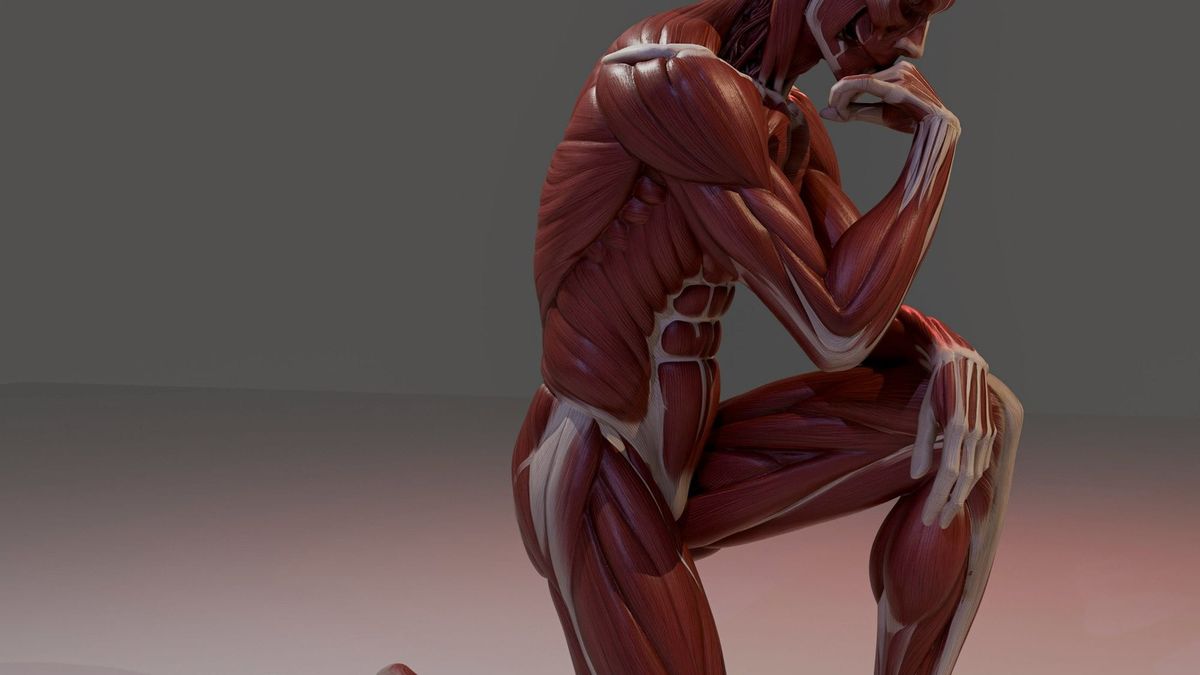
Body recomposition means losing fat and gaining muscle at the same time. So, rather than just making your body smaller, you're changing what it's made up of (i.e., its “composition” or body composition). Two people can weigh the same weight but look completely different and have vastly different health prospects depending on how much muscle and fat they carry.
Here's what makes “recomposition” different from typical weight loss: your body weight includes fat, muscle, bone, organs, water, and connective tissue. When you step on a scale, you're measuring all of these together. Body composition refers to the relative proportions of the different tissues, particularly the ratio of fat to everything else.
Why this matters
The person with more muscle and less fat generally has better health, greater functional capacity in everyday life, and lower disease risk — even if they’re the same body weight as someone who has less muscle and more fat.
For years, conventional thinking suggested you couldn't build muscle and lose fat simultaneously. The logic seemed sound: building new tissue requires extra energy ("surplus"), while burning fat requires an energy deficit. How could both happen at the same time?
The confusion comes from treating the body as a single, unified system. In reality, muscle tissue and fat tissue operate independently from each other and respond to different signals. Fat tissue stores and releases energy. Muscle is made of proteins that contract to produce force and move you around. They respond differently to different hormones, nutrients, environments, and changes on different timescales.
Under the right conditions, such as adequate protein intake, resistance training, and a moderate energy deficit, your body can break down fat for energy while building muscle at the same time. Think of protein as the building material and the rest of your calories (from fat and carbohydrate) for energy. You need bricks to build a house, not just fuel for the builders.
Can anyone do body recomposition?
Body recomposition isn't equally accessible or achievable for everyone. Those new to resistance training typically see the most dramatic changes, as do people who're carrying more body fat to start with. Age and training history matter too, but this doesn't mean older and leaner people can't achieve recomposition — they absolutely can, though the changes may be more modest and hard-fought.
Over time, there'll likely be a point where dedicating specific periods to either building muscle or losing fat becomes more efficient than doing both at the same time. Some people may also prefer to concentrate on one thing at a time (i.e., “bulk” or “cut”), or focus on building more muscle (while losing a bit of fat), or losing a large amount of fat while simply maintaining their muscle mass.
What sustainable body recomposition isn't!
Body recomposition is not a rapid transformation. It's a slow, moderate, sustained process, requiring months of consistent effort. It won't produce the dramatic scale drops that crash diets promise. In fact, your total weight might barely change as you gain muscle and lose fat in roughly equal amounts.
This approach also requires alignment of three distinct elements:
- Exercise that signals your body to maintain or build muscle.
- Nutrition that provides adequate protein and a moderate energy deficit.
- Recovery through sleep and managing stress.
Optimising one while neglecting others won't work. Over the series, we'll cover each of these components in detail — the specific training approach needed, nutritional requirements, recovery principles, and how to actually measure progress when the scale doesn't tell the full story.
Lesson 2: Resistance training for recomposition

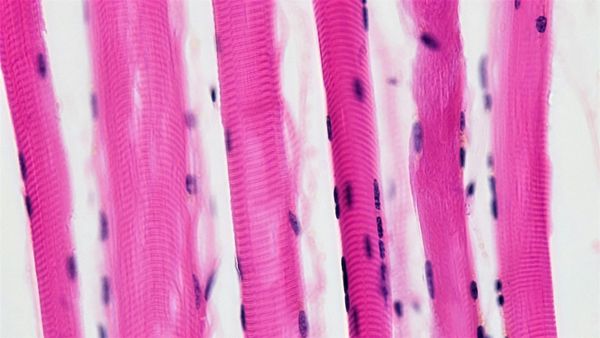
Your body is efficient at managing its resources. Muscle is “metabolically expensive”, meaning it requires a lot of energy to build, maintain, and repair, even when you're not using it.
From an evolutionary perspective, carrying unused muscle is wasteful. This is why your body will break it down when it's not in use, particularly when your energy reserves are low (i.e., when you're in a calorie deficit). This isn't punishment for skipping workouts — it's your body allocating its resources more efficiently.
The most powerful signal for building muscle is mechanical tension (from muscle “contractions”), which is generated most efficiently through resistance training. Nothing else can substitute for it.
How resistance training actually works
When you lift a weight heavy enough to challenge your muscles, you create “mechanical tension” in your muscles, similar to when you flex and your muscles become tense. When you “overload” your muscle by lifting until it's either too heavy to move or you're too fatigued to continue lifting, your body recognises this as a signal — that adaptation is needed.
In response, your individual muscle cells begin producing more protein than they normally do. This process continues for up to 48 hours after training (assuming you're consuming adequate dietary protein). Resistance training provides the signal; dietary protein provides the raw materials.
Despite commonly held beliefs, you're not just simply repairing damaged tissue and restoring it to its previous state. You're rebuilding it to be larger and stronger, making it more capable and prepared to handle similar mechanical stress in the future.
All of these changes happen at the cellular level, so you won't notice measurable growth after a single session. But over weeks and months, these small adaptations accumulate into visible changes in muscle strength and size.
Progressive overload: why newbie gains won't last forever
Your body adapts to the demands placed on it. Once it successfully adapts to a given level of mechanical stress, that stimulus is no longer challenging enough to trigger further adaptation.
This is why “progressive overload”, which means you gradually increase training demands over time, is essential for keeping growth going. This doesn't necessarily mean adding more weight to the bar every session, though that's the most common approach. You can also increase the number of repetitions, add sets, reduce rest periods, or improve your technique.
Progressive overload is particularly important during body recomposition because maintaining or increasing training volume helps ensure your body prioritises keeping the muscle it has, even when your energy reserves are limited. The training signal must remain strong enough to convince your body that the muscle is worth keeping despite its high metabolic cost.
Training during an energy deficit
There's a persistent myth that you cannot build muscle while you're in an energy deficit; you can only maintain it at best. While an energy deficit isn't optimal for muscle growth, it doesn't mean that you can’t build muscle whatsoever.
When you combine resistance training with adequate protein intake, muscle growth can happen. It's not as efficient as building muscle in a calorie surplus, but it remains possible. The size of the deficit matters — very large deficits exceeding 500 calories a day will impair both your capacity for muscle growth and your training quality. Smaller calorie deficits (less than 500 calories) are better.
What about cardio?
Aerobic exercise like walking, running, or cycling increases energy expenditure and can help create the energy deficit needed for fat loss. However, the muscle contractions during cardio are light, low-force, and repetitive.
This doesn't challenge muscles the way heavy resistance does, so it doesn't generate meaningful, measurable muscle growth.
This doesn't mean you should avoid cardio. It offers important health benefits and supports fat loss. Just understand it's not a substitute for resistance training. For maximising both body recomposition and general health, you'll likely want to include both resistance training and cardio.
How resistance training supports fat loss
Beyond building muscle, resistance training offers several benefits that support fat loss.
- Muscle is metabolically active, so increasing muscle mass raises your resting metabolic rate. Five extra kg of muscle will burn the energy equivalent of about two to three kg of fat over a year.
- Resistance training also burns energy during the workout and for several days afterwards.
- The more muscle you have and the stronger it becomes, the more work you can do during the training session, meaning you’ll burn more energy during your workout.
- Trained muscle becomes more efficient at using fat for fuel, particularly during rest and lower-intensity activities. This promotes the fat-loss part of recomposition.
Common training mistakes
The most common error is doing too much too soon. More training isn't always better, especially when you're on a calorie-restricted diet. There's an optimal amount of training that maximises adaptation without impeding your recovery capacity.
Another mistake is neglecting progressive overload — doing the same workouts with the same weights indefinitely. Without gradually increasing training demands, your body has no reason to continue adapting.
Finally, many people avoid resistance training altogether, hoping that cardio and diet alone will reshape their bodies. However, without the mechanical tension signal from resistance training, your body has no reason to maintain muscle while you lose fat.
Lesson 3: Nutrition for recomposition

Nutrition recommendations for body recomposition are challenging because you're asking your body to support two different processes at the same time, which are traditionally viewed as incompatible: building new (muscle) tissue while in an energy deficit.