Yo-yo Dieting & Weight Cycling: Risks & How to Prevent It
Yo-yo dieting (or weight cycling) is not good for your health and can make future weight loss attempts more difficult. Learn how to avoid it.


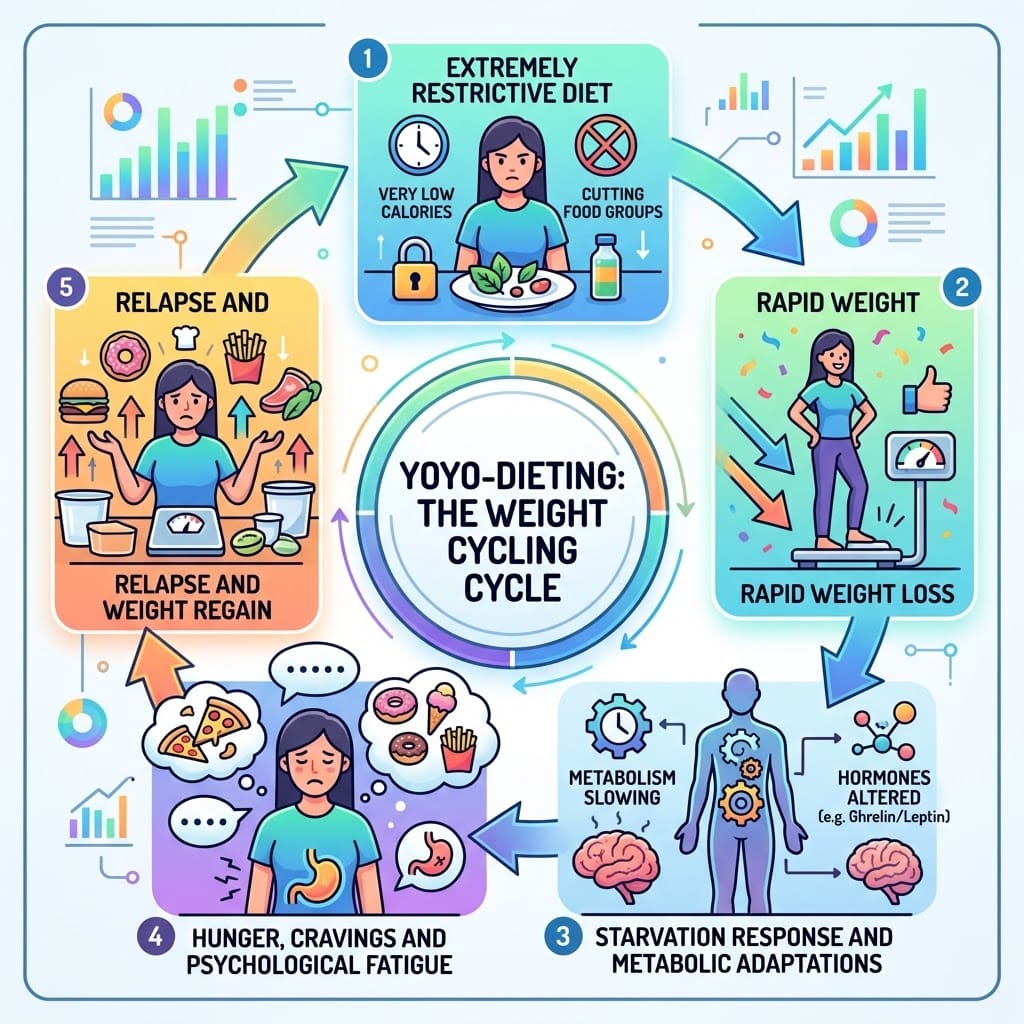
- Yo-yo dieting happens when overly restrictive diets cause rapid weight loss, followed by relapse and regaining the lost weight (or more).
- It affects the majority of people attempting weight loss. This is due to powerful biological and psychological defence mechanisms in your body.
- Yo-yo dieting (“weight cycling”) is not good for your future weight loss prospects or your physical and mental health. There are ways to avoid it.
Yo-yo dieting is the all-too-common and frustrating cycle of losing weight only to regain it and repeat the process, again and again and again and again. It affects a large majority of dieters attempting, or who even end up achieving, a significant amount of weight loss.
This pattern isn't a personal failure or lack of willpower; it's a depressingly predictable response to overly restrictive diets, which fail to understand basic biology and human behaviour.
What is the yo-yo diet "cycle"?
“Weight cycling” or yo-yo dieting typically follows a predictable pattern:
- Initial enthusiasm for the new diet
- Aggressive calorie restriction
- Then rapid weight loss
- Followed by increasing hunger, cravings, and psychological fatigue,
- That ultimately results in overeating and regaining the weight lost.
Sometimes, it actually exceeds the original starting weight. The exact opposite of what you intend. Research does show that the majority of people who do yo-yo diets often end up regaining the weight, and sometimes more than those who never diet at all.[1]
Weight cycling perpetuates itself because each failed attempt reinforces the belief that more extreme measures are necessary for weight loss. The inevitable regain gets attributed to personal weakness rather than a perfectly natural (but misunderstood) physiological response. It’s a “desperate times call for desperate measures” thought pattern that's ultimately wrong.
This mindset creates a psychological trap where people alternate between periods of rigid control and chaotic eating. They never really develop the sustainable habits necessary for long-term change and maintaining a healthy body weight.
Weight Cycling: The Science Behind It
When you lose weight, your body activates many of biological processes that are designed to defend against what it perceives as starvation.
One of these is changing your metabolic rate, which can decrease by 10-15% or 200-300 calories a day in response to weight loss (known as “adaptive thermogenesis”). This decrease can persist for months (or possibly years) after weight loss (and even after weight regain). This makes future fat loss endeavours more difficult.
Additionally, hormonal changes can increase hunger signals and encourage overeating. Together, this increases your physiological drive to eat more and more often. These aren't just short-term responses, either. A study following “The Biggest Loser” contestants found that negative metabolic and hormonal changes last for years after losing large amounts of weight.[2]
When foods are completely forbidden, they become more psychologically attractive and trigger intense hunger cravings that typically lead to binge-eating. This restriction-binge cycle can become “self-reinforcing” (a self-fulfilling prophecy), with each new “failure” strengthening beliefs about your perceived lack of self-control.
Extreme “all-or-nothing” mindsets and severely restrictive diets are common in weight cycling. Catastrophising perfectly normal eating patterns as a complete failure can also cause abandonment of healthy behaviours: it's the “I've blown it, so I may as well give up”. It’s that one cookie, which then becomes the whole pack.
This “black-and-white” thinking prevents the development of one of the most important skills for long-term success for fat loss and weight control: moderation.
Health Risks of Weight Cycling
Beyond the frustration of repeated weight regain, yo-yo dieting poses a genuine health risk. Research shows that weight cycling is associated with increased risk of disease and death (at any body weight).[3]
Repeatedly triggering stress-starvation responses, overeating patterns, and loss of muscle mass can lead to long-term metabolic and psychological "scarring". These changes are not only bad for health but also make subsequent fat loss attempts more difficult.
Repeated failed attempts are also not good for your self-confidence and self-belief in achieving goals. It creates a sense of helplessness around body weight. Food anxiety, eating disorders, stress, social isolation and lower quality of life can be more detrimental to your all-round health than your body weight alone. These can also persist long after abandoning diets: the mental health issues may stick around.[4][5]
If dieting is affecting your mental health or you've had an eating disorder, speak to a doctor or specialist before starting a new diet or any other weight loss attempts.