Unilateral Exercise for Muscle Growth: Is One Leg Better than Two?
Unilateral training, where one side of the body is exercised at a time, has benefits. But there are also drawbacks that need to be considered.

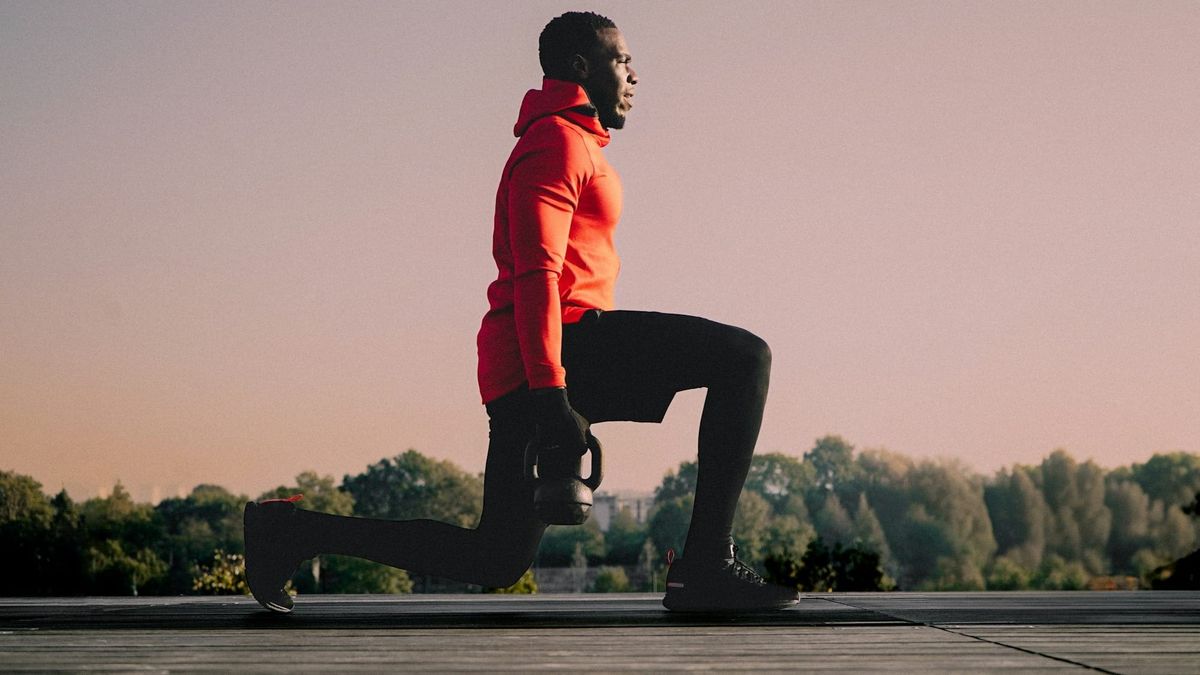
- Each limb can usually handle more load when trained alone than when both limbs work together (called the 'bilateral deficit')
- The cross-education effect makes unilateral training useful for injury, rehab and recovery.
- However, unilateral training sessions are usually longer and require some extra (core) stability and balance skills, which need to be practised.
Resistance training is dominated by “bilateral” movements such as squats, deadlifts, and bench presses. By contrast, “unilateral training”, where you exercise one limb at a time, generally receives less attention despite offering some unique and not well-known advantages.
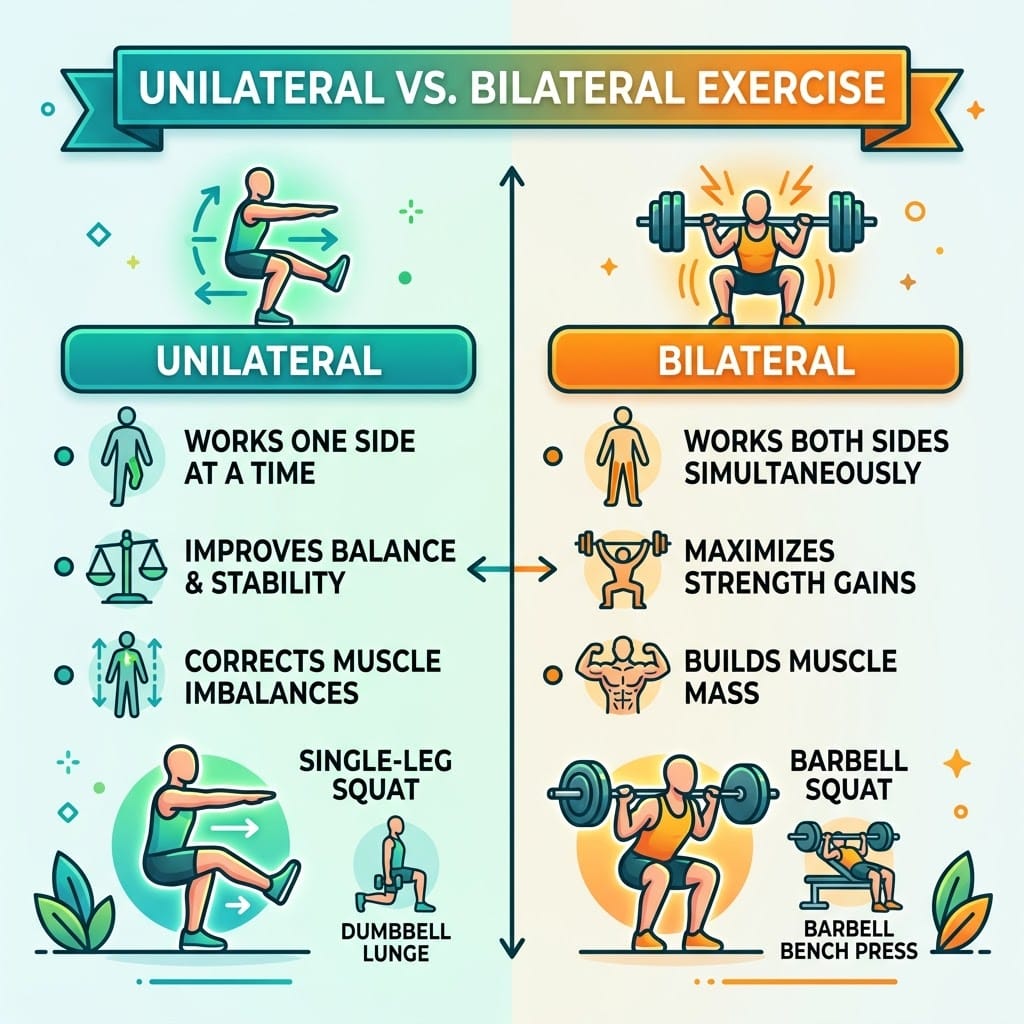
Unilateral training can be used to address balance, muscle imbalances, strength deficits, and potentially muscle growth, in ways that bilateral exercises cannot. Split squats, single-leg deadlifts, lunges, step-ups, single-arm rows, single-arm curls, and single-arm overhead presses are all examples of unilateral exercises, and unilateral training simply means building workouts from them.
Understanding muscle “asymmetry”
Whilst gym exercises are usually "bilateral", everyday movements rarely require perfect symmetry when you move. Think about it: how often do you move both sides of the body the same way, at the same time?
Beyond the fact that we rarely move symmetrically, things like daily activities, sports, work, and previous injuries can also create muscle imbalances on one side of the body compared to the other. Posture throughout the day (and while you sleep) can also contribute to asymmetry.
Unilateral training has a reputation for fixing “asymmetries” whilst at the same time stimulating muscle growth. Research has shown that unilateral training stimulates muscle growth similar to that of bilateral training.[1]
The Bilateral Deficit: What is it?
Unilateral training also takes advantage of something called the “bilateral deficit”. The bilateral deficit is a well-documented quirk in the body’s muscular system. It's where you lift more weight individually with each limb (when added together) than you can when lifting the weights at the same time.
Try it for yourself next time you are at the gym. See how much you can preacher curl one arm at a time (say for 10 reps). Add those numbers together. Then try to preacher curl that same amount with both arms at the same time. Most people can’t. It is generally easier to do 10×15kg on preacher curls on each arm than it is to do 10×30kg with both arms.
The bilateral deficit varies between people and different types of exercise. But research consistently shows that the sum of unilateral maximum efforts typically exceeds bilateral maximum effort by 5-20%.[2][3]
The implications for muscle growth are that when you exercise your muscles “bilaterally”, you are not maximally challenging the muscle to grow. This can also be exacerbated if you are carrying an injury or are a lot weaker on one side of your body.
How Can You Train an Untrained Limb? Cross-Education
Beyond improving individual limb strength, unilateral training offers more surprising benefits. Yet another quirk that scientists found is something called the “cross-education effect”.
Training one limb unilaterally can actually increase strength in the other limb that hasn’t done any exercise at all! This is thought to happen because there's some ancient evolutionary cross-wiring in your brain. This is where the nerves controlling the other side of the body are stimulated as well, even without moving the muscle at all!
That said, the strength increases that we see on the other side of the body are only 10-30% of what we see on the side that’s actually doing the exercise. We don’t see any muscle growth. As you can imagine, using the “cross-education” effect is particularly valuable for helping recover and maintain strength if you have an injury on one side of your body.[4][5]
 Dr. Robert Davies
Other Things to Consider
Core stability
Unilateral training also challenges your "core stability" as there is a greater emphasis on balance compared to bilateral exercises, as by their nature bilateral lifts partly balance themselves (the load is equal on both sides). Greater trunk (or "core") muscle activity has been shown during unilateral exercises, as it creates imbalances that your body must correct to do the movement.[6]
Think about this: holding two 10kg dumbbells overhead versus holding one 20kg dumbbell in a single hand. You're holding the same weight above your head; however, the latter demands significantly greater core stability.
The good news is that greater core activation potentially translates to better movement in general. This means that unilateral exercise can improve bilateral exercise performance as well. But it also applies to real-world or sports activities, which frequently require “asymmetrically” loaded movements.
Muscle activation and training volume
Whilst controversial, the distinct and unconventional quirks in unilateral training potentially also transfer to greater muscle growth. Greater loads, intensities, and volumes per limb allow each limb to reach its max capacity (and thus growth potential).
If there are major imbalances on one side of the body compared to the other, the weaker side can be masked or compensated for by the stronger side. This means that during exercise, the stronger side is “overloaded” (lifting more than it should), whilst the weaker side is “underloaded” (lifting less than it should) — when in fact, it should really be the other way around.
This creates a problem: the stronger side works beyond what it is supposed to (“overloaded”) while the weaker does less (“underloaded”) — the opposite of what's needed to improve balance.