Eccentric Exercise For Muscle & Joint Health: Does it Work?
Eccentric training is where your muscle lengthens under force. The greater force produced under these contractions may mean more muscle growth.

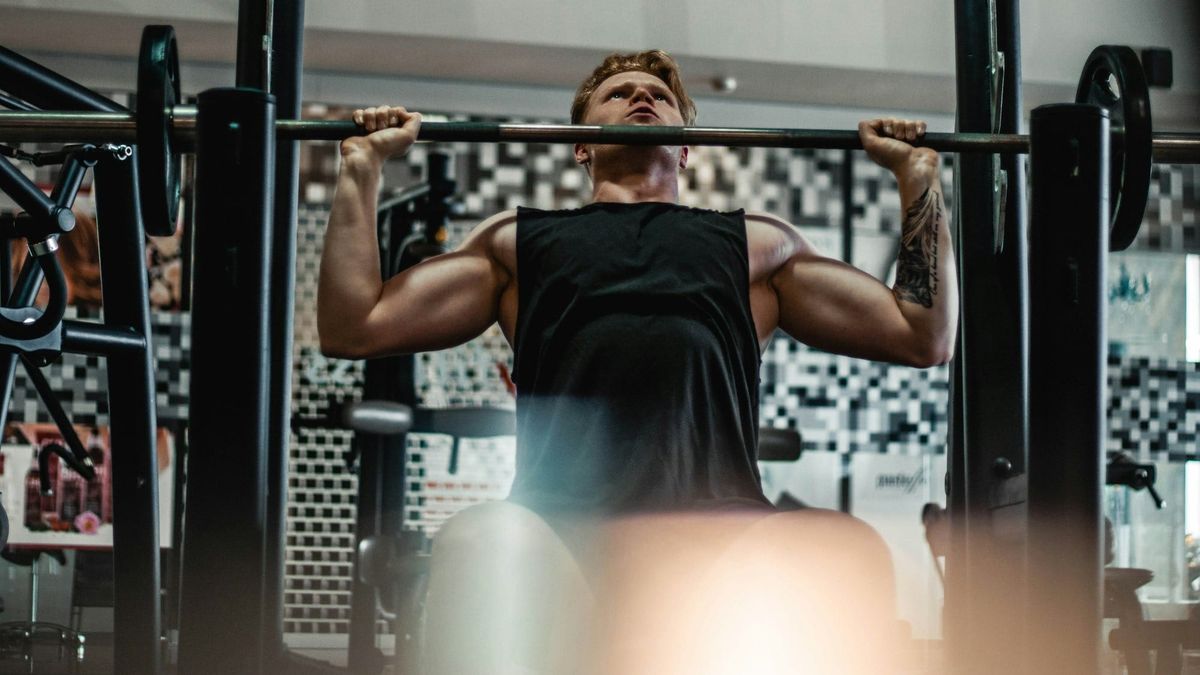
- Eccentric contractions involve muscle lengthening under tension and can generate greater forces than concentric (shortening) contractions.
- This greater load creates unique adaptations leading to superior growth stimulus compared to concentric training.
- Eccentric exercise training requires careful progression and longer recovery due to increased potential for muscle damage.
When you think about muscle-building exercise, you might picture lifting heavy weights or performing explosive movements. But one of the most powerful and sometimes overlooked tools is "eccentric" exercise.
This style of exercise emphasises the controlled lengthening of the muscles under tension. Whether you realise it or not, eccentric contractions occur in almost every workout and in everyday life, and it plays a crucial role in muscle adaptations.
What is Eccentric Exercise?
Eccentric exercise specifically refers to a type of muscle contraction where the muscle lengthens while generating force. It is sometimes referred to as the “lowering” or “negative” phase of a lift. Think walking downstairs, running downhill or sitting down.
This is the opposite of the “concentric” contraction, where the muscle shortens. Like walking upstairs, running uphill or getting up off the sofa. Whilst both concentric and eccentric contractions are essential for most human movements, they are used together in everyday life. The eccentric contraction is particularly important for its unique effects on your muscles and on muscle growth.
One defining characteristic of eccentric contractions is their ability to generate greater forces than concentric contractions. This means you can often resist heavier loads during the eccentric phase of the lift than you can concentrically. In other words, you can lower more weight than you can lift.
Scientists think this may be a hard-wired safety mechanism to prevent serious muscle and joint injuries. However, it also makes eccentric training highly effective at creating tension in the muscle, which is a key driver of growth.[1]
Different Types of Muscle Contractions
- Eccentric contraction: The muscle lengthens while producing force (e.g., lowering a weight).
- Concentric contraction: The muscle shortens while producing force (e.g., lifting a weight)
- Isotonic contraction: The muscle moves while producing the same tension. This type of contraction is rarely done in natural human movements.
- Isoinertial contraction: The muscle contracts against a fixed external load (e.g., barbell, dumbbell or suitcase)
- Isokinetic contraction: The muscle contracts at a constant speed. It is usually used in a rehab setting, not in natural movements that you do daily.
- Isometric contraction: The muscle produces force but doesn’t move (e.g., holding a weight or a barnacle stuck to a rock).
- Auxotonic contraction: The muscle moves while changing its tension. This is most common in natural movements.
What does eccentric training do?
Studies have shown that eccentric training creates distinctive changes in the muscles compared to normal weightlifting exercise. During eccentric contractions, the individual muscle "fibres" experience higher tension and greater physical damage at the cellular level (termed microdamage or microtrauma). This stimulates a greater growth response.[2]
Beyond muscle growth, eccentric training is also effective at improving muscle strength and tendon strength. This, this is why it's frequently used in rehabilitation programs for preventing or recovering from sports injuries.[3]
Eccentric exercise: is it all upside?
Not quite. Over-focusing on eccentric exercise can be a double-edged sword. If done incorrectly or you do too much too quickly, it can lead to injury or prolonged recovery times.
While muscle soreness can be an indicator of an effective stimulus to grow, there can also be muscle pain with no or little growth. Too much eccentric exercise without proper progression may lead to injury or training setbacks, especially for novice lifters.[4]
To use eccentric training safely, it’s essential to incorporate it thoughtfully into your training programme. Progressive overload remains key. Gradually increasing the amount of eccentric exercise allows muscles and connective tissues to adapt without causing excessive damage. It's a balancing act.
Eccentric exercise methods can vary. From deliberately slow “negative” repetitions (e.g., lowering a weight over 3–5 seconds with a fixed weight like a dumbbell or barbell) to special techniques and specialised machines, where the eccentric phase of the exercise uses heavier loads than the concentric phase.
Eccentric training workouts & safety precautions
In practical terms, you might incorporate eccentric training into your programme by emphasising the slower and more controlled lowering phase during different exercises.
Another popular method is “negatives,” where the lift phase is assisted. For example, a training partner helps lift the weight, and the lifter controls only the lowering phase of the exercise. This allows you to safely exceed your normal strength limits, increasing mechanical tension and thus the growth stimulus.
Studies show that incorporating eccentric exercise in resistance training programs (not rehab programs) can lead to greater muscle growth outcomes. But for growth, it needs to be heavy (probably above 100% concentric max).
If you're lifting the same weight for the same time for the same number of sets, reps, and volume, it doesn’t seem to stimulate different amounts of growth, regardless of whether it is done concentrically or eccentrically.[3]
It is also worth noting that eccentric exercise may need longer recovery, which may be prolonged with poor nutrition, rest, and recovery practices. It seems eccentric exercise can be a powerful part of an effective exercise training programme. However, it is not a panacea.
Due to your muscles’ ability to generate higher forces during muscle lengthening, eccentric exercise can manipulate the extra mechanical stress, microtrauma, and muscle growth to its advantage. But it requires careful and considered execution to balance the "growth" stimulus with recovery and minimise injury risk: it is probably not advised for novice lifters.
Sources
- Douglas J et al. Eccentric Exercise: Physiological Characteristics and Acute Responses. Sports Med. 2017 Apr;47(4):663-675. PMID: 27638040
- Franchi MV et al. Skeletal Muscle Remodeling in Response to Eccentric vs. Concentric Loading: Morphological, Molecular, and Metabolic Adaptations. Front Physiol. 2017 Jul 4;8:447. PMID: 28725197
- Roig M et al. The effects of eccentric versus concentric resistance training on muscle strength and mass in healthy adults: a systematic review with meta-analysis. Br J Sports Med. 2009 Aug;43(8):556-68. PMID: 18981046
- Hody S et al. Eccentric Muscle Contractions: Risks and Benefits. Front Physiol. 2019 May 3;10:536. PMID: 31130877