Is Weight Training Good for Children & Teenagers?
Weight training is safe for children and teens. It has several well-known health benefits when done properly and supervised.

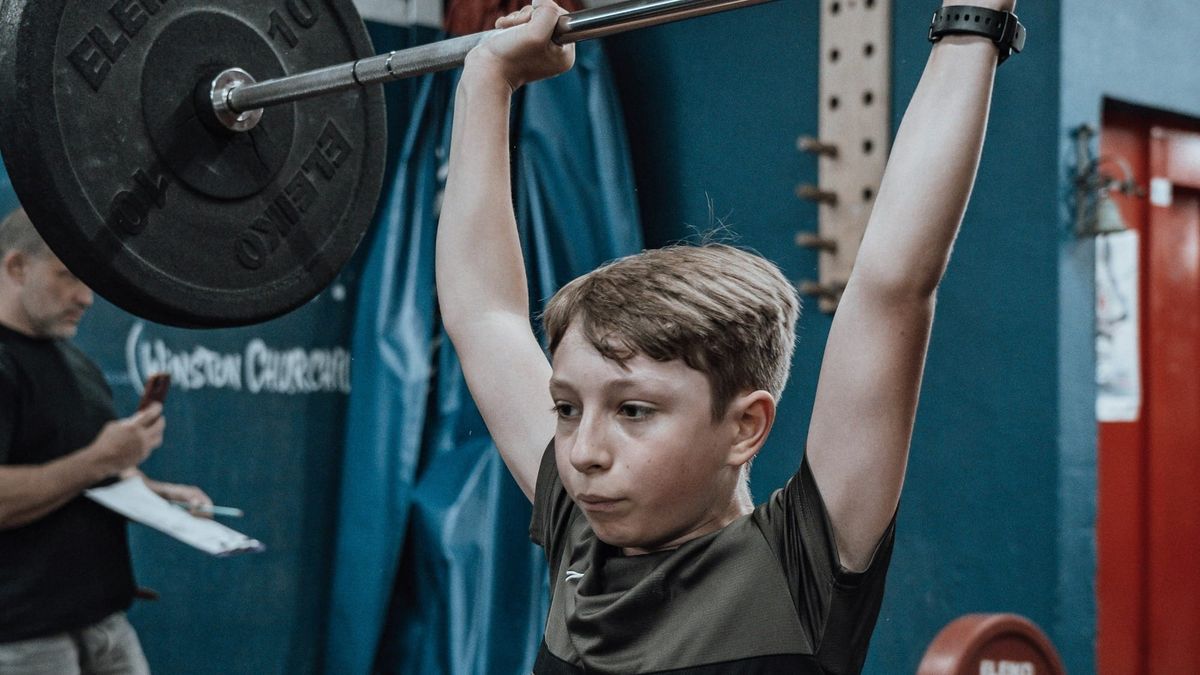
- Weightlifting is safer for children and teens than a lot of other sports. The dangers and growth-stunting concerns are mostly overblown.
- The benefits differ by age group. All children will get stronger and learn how to move better. But only teens can grow their muscles.
- Beyond the muscular benefits, weightlifting can also improve their cardiovascular health, bone health, and mental health.
The image of children and teenagers lifting weights often provokes concerns amongst parents, coaches, and even paediatricians. So, myths about stunted growth, increased injury risk, and inappropriate types of training have created unnecessary barriers to youth participation in weightlifting.[1]
However, the scientific evidence presents a different picture. Properly supervised strength training represents not only one of the safest ways to exercise, but also one of the most beneficial activities young people can engage in. The benefits go beyond muscle.[2]
Is Weightlifting Safe for Children & Teens?
Perhaps the most persistent myth surrounding weightlifting is the safety and injury risk. Studies show that injury rates for supervised resistance training are comparable to (and sometimes lower than) those of other popular sports and activities.
Most of the injuries that happen are due to improper supervision, inappropriate exercise selection, attempting to lift weights that are too heavy or inadequate preparation and warm-ups. The growth stunting concerns are largely unfounded when proper technique is used under qualified supervision.[1]
Is Weightlifting Healthy for Children & Teens?
In prepubertal children, the adaptations to weightlifting are primarily "neurological" (e.g., improved strength and movement efficiency) rather than muscle size increases.
But, during and after puberty, hormonal changes, including increases in the “muscle-building” hormones (e.g., testosterone, growth hormone, insulin-like growth factor-1), create a more favourable environment for muscle growth and actual muscle growth.[3]
- Improving cardiovascular fitness
- Better body composition (i.e., less fat, more muscle)
- Bone density
- Metabolic and general health in overweight children and teens
- Injury prevention
- Mental health and well-being (e.g., self-esteem, body image, self-confidence)
- Intelligence and academic performance
Weightlifting for Youth: Age-Appropriate Programming
Safe and effective weightlifting must be tailored to the developmental stage rather than chronological age alone. Movement skills and biological maturation vary considerably among same-aged children. This means that individual assessment and programming are essential.[2]
Preadolescent children (ages 6-11)
Emphasis should be placed on fundamental movement skills, body weight exercises, and light resistance training with perfect technique. The primary goal here is to develop movement "competency" (i.e., be able to control their own body's movements), establish good exercise habits, and create positive associations with physical activity.
Early teens (ages 12-15)
They can begin incorporating more structured weightlifting training programmes whilst maintaining emphasis on technique and gradual progression. This group can benefit from introducing basic barbell and dumbbell exercises whilst continuing body weight training.
Late teens (ages 16-18)
Late teens can engage in more advanced weightlifting programmes like those used with adults. This should only be started once they have developed adequate movement competency and training experience with lighter weights and their own body weight.
Supervision and appropriate progression are still advised even for this age group. These age ranges provide general guidelines, though individual assessment of maturation status, movement competency, and training readiness remains more important than chronological age alone.
In most cases, children and teens should not be using strength training equipment without supervision from a qualified strength training professional. This supervision ensures proper technique, appropriate exercise selection, and suitable progression whilst creating a safe and positive learning environment.
How Children & Teens Can Train Safely
Successful weight training programmes need careful planning that considers the child's individual development, the resources that are available, and long-term ("life-long") goals. Rather than simply scaling down adult programmes, training should follow principles specifically designed for teens and children.
Progressive overload is typically based on movement and skill development rather than load and volume. Younger weightlifters should master bodyweight exercises and prove they can perform exercises with proper movement technique before progressing to add external weight.
Variety and enjoyment should be integral components of training programmes to maintain engagement and prevent boredom. Games, challenges, and varying activities can make weight training enjoyable while still providing benefits. Support from instructors and parents will help maintain interest.[1][3]
Common challenges
Despite the clear benefits, there are also several challenges. Addressing most of these challenges requires education, proper planning, and realistic expectations.
- The availability of qualified supervision represents perhaps the greatest challenge. Most children will lack access to exercise professionals with appropriate experience.
- Equipment. This means access to appropriately sized equipment and lighter weights for initial training. Standard adult equipment may not suit smaller body frames or developing strength levels.
- Time constraints in school-based programmes typically limit the quality and frequency of training sessions. Creative programming that works with existing physical education can help overcome time issues.
- Parental concerns: whilst well-intentioned, they can create barriers to participation. Education about safety and the clear benefits can help address these concerns.
Bottom Line
Youth resistance training is safer than many popular sports when properly supervised, with injury rates and growth-stunting concerns scientifically unfounded with appropriate programming and qualified supervision.
Successful youth programs emphasise movement competency over load progression, incorporate variety and enjoyment, provide qualified supervision, and deliver benefits beyond strength, including improved cardiovascular health, bone health, injury prevention, and psychological wellbeing.
Sources
- Faigenbaum AD et al. Youth resistance training: updated position statement paper from the national strength and conditioning association. J Strength Cond Res. 2009 Aug;23(5 Suppl):S60-79. PMID: 19620931
- Lloyd RS et al. Position statement on youth resistance training: the 2014 International Consensus. Br J Sports Med. 2014 Apr;48(7):498-505. PMID: 24055781
- Myers AM et al. Resistance training for children and adolescents. Transl Pediatr. 2017 Jul;6(3):137-143. PMID: 28795003
- Robinson K et al. Effects of Resistance Training on Academic Outcomes in School-Aged Youth: A Systematic Review and Meta-Analysis. Sports Med. 2023 Nov;53(11):2095-2109. PMID: 37466900
- Stricker PR et al Resistance Training for Children and Adolescents. Pediatrics. 2020 Jun;145(6):e20201011. PMID: 32457216.