Why Seasonal Vegetables are Healthier
Discover why eating seasonal vegetables benefits your health and the planet.


Key Takeaways
- Vegetables harvested at peak ripeness retain more nutrients; vitamin C, folate, and antioxidants begin degrading immediately after harvest.
- Seasonal eating naturally varies plant food intake, which is linked to a more diverse, health-supporting gut microbiome.
- Local seasonal produce has a lower carbon footprint and typically needs fewer pesticides and energy-intensive growing methods than imported alternatives.
Seasonal vegetables are those harvested at their natural time, when ripe. They generally retain more flavour and nutrients than out-of-season produce. This article reviews evidence of whether seasonality actually affects nutrient content, taste, and the environment.
Supermarkets offer strawberries in December and tomatoes in January. This year-round availability is convenient, but it comes at a cost — to your nutrition, your palate, and the planet. “Seasonal eating” means consuming fruit and vegetables at their natural harvest time in your home region or country, which offers additional benefits that convenience can't offset.
Traditionally, people had no choice in what they ate. They consumed what nature provided when it provided it. Eating with the seasons wasn't an option. This inadvertent seasonal eating pattern meant automatically consuming a diverse array of vegetables throughout the year as different crops came into harvest.
Research shows that the more different plant foods you consume, the more diverse your microbiome is (which is associated with better health). Seasonal eating naturally encourages this diversity1.
The case for seasonal vegetables rests on four pillars: better nutrition, better flavour, lower environmental impact, and lower cost. When vegetables ripen naturally under optimal conditions, they develop their full spectrum of vitamins, phytonutrients, and flavour compounds2. They don't need to be picked unripe for shipping and then stored for months.
The nutritional advantage
Vegetables harvested at peak ripeness contain significantly higher nutrient levels than those picked early for transport. A tomato allowed to ripen fully on the vine develops more of some nutrients than one picked green and ripened artificially. The same principle applies to most vegetables — natural ripening allows complete development of beneficial compounds3.
Local, seasonal vegetables spend less time in storage and transport, minimising nutrient degradation. Vitamin C, folate, and certain antioxidants begin breaking down immediately after harvest. The difference between a courgette picked yesterday at a local farm and one shipped from another continent is noticeable, both nutritionally and in taste.
Flavour also peaks at the natural harvest time. Spring asparagus, summer tomatoes, autumn squash, and winter greens each taste distinctly better when in season. This isn't nostalgia or imagination — it's fact. Vegetables develop their characteristic flavours through complex chemical processes during ripening that can't be replicated in storage or through artificial ripening.
The environmental case
Food transportation contributes significantly to greenhouse gas emissions. A kilogram of onions shipped from the opposite side of the world will have a higher carbon footprint compared to a kilogram of locally grown onions.
Seasonal eating reduces the demand for energy-intensive growing methods like heated greenhouses and the production of chemical fertilisers. Whereas growing vegetables outdoors, in-season, will reduce the energy and environmental cost of food.
Supporting local farms that grow seasonally can promote sustainable agricultural practices. These farms typically use fewer pesticides, maintain soil health better, and preserve biodiversity. Your purchasing choices directly influence farming methods and encourage alternatives to large-scale industrial agriculture.
The diversity principle
Perhaps the strongest argument for seasonal eating relates to the variety of foods you end up eating, which is linked to health. Particularly for your gut microbiome, the trillions of bacteria living in your digestive system, like a diverse range of foods.
Different vegetables provide different types of fibre and 'phytonutrients', feeding different bacterial species in your gut. A more diverse microbiome is linked with better immunity, lower inflammation, improved mental health, and reduced risk of many chronic diseases4. Seasonal eating forces variety into your diet. You can't eat the same vegetables year-round when you follow the seasons.
Spring brings asparagus, peas, and young greens. Summer offers tomatoes, courgettes, and peppers. Autumn provides squash, root vegetables, and brassicas. Winter features hardy greens, roots, and vegetables that can be stored pretty well. Note the different colours with the seasons. This natural rotation ensures you're constantly feeding your microbiome different things.
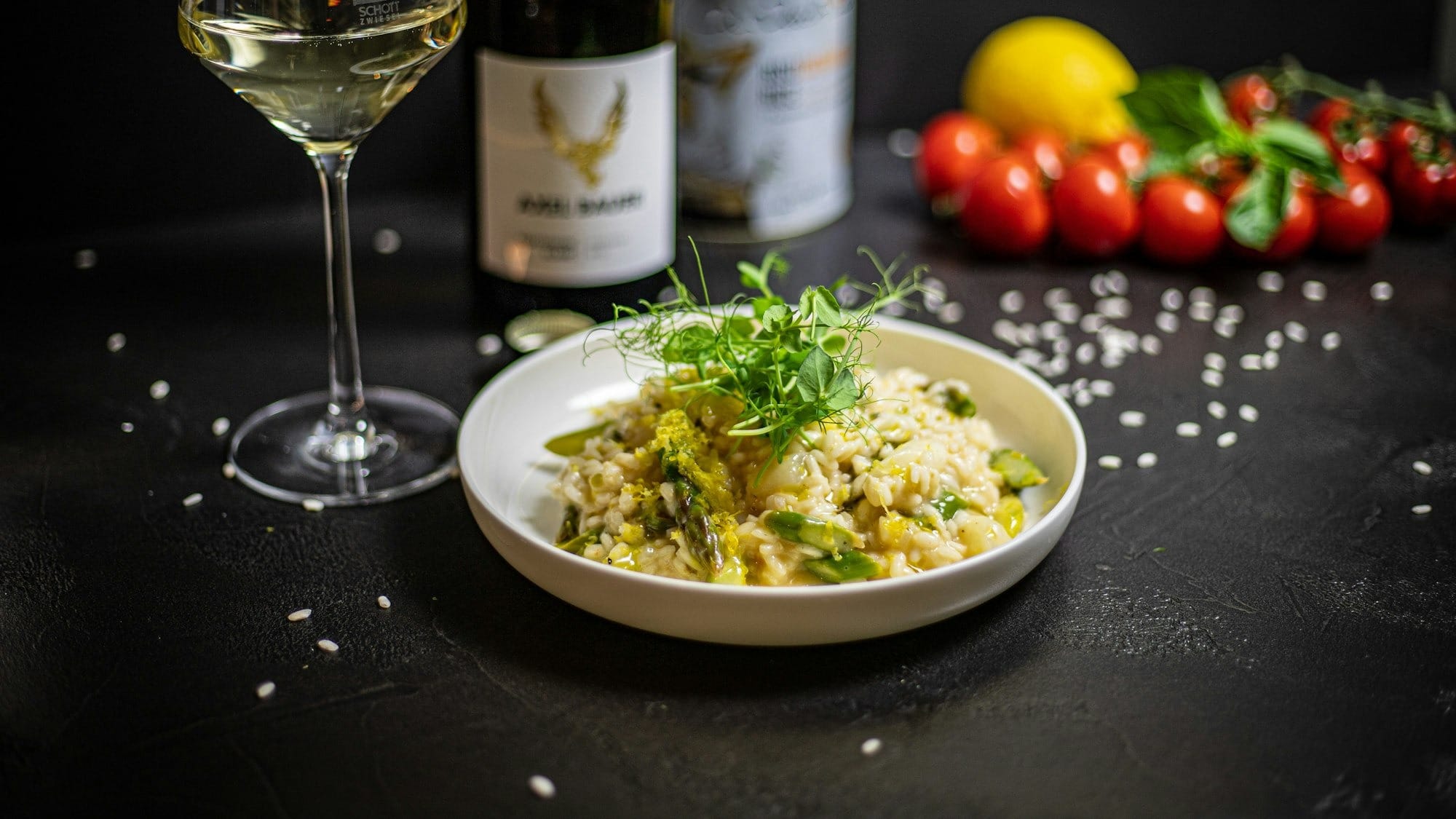
Spring: asparagus and pea risotto
Celebrating spring's tender, green, delicate vegetables.
Ingredients
- 300g (10 oz) asparagus
- 150g (1 cup) fresh or frozen peas
- 300g (1.5 cups) risotto rice
- 1 litre vegetable stock (kept warm)
- 1 onion (finely diced)
- 2 garlic cloves (minced)
- 100ml white wine (optional)
- 40g (1.5 oz) Parmesan (grated)
- 3 tbps extra virgin olive oil
- zest of 1 lemon
- fresh mint
Directions
- Remove the woody ends from the asparagus and then cut the spears into thirds.
- Heat olive oil in a large pan. Add onion, cook gently for 5 minutes.
- Add garlic and rice, stir for 2 minutes until rice is translucent.
- Add wine (if using), stir until absorbed. Add warm stock a few ladles at a time, stirring frequently, allowing each addition to be absorbed before adding more.
- After 15 minutes, add asparagus and peas. Continue adding stock and stirring for another 5–7 minutes until rice is creamy and vegetables are tender.
- Remove from heat, stir in Parmesan, lemon zest, and torn mint. Season well.
Summer: Mediterranean tomato tart
Showcasing summer tomatoes at their peak.
Ingredients
- 320g (11 oz) ready-rolled puff pastry
- 500g (1.1 lbs) mixed heritage tomatoes (sliced)
- 150g (5 oz) ricotta or soft goat's cheese
- 2 garlic cloves (minced)
- Handful of fresh basil
- 2 tbsp extra virgin olive oil
Directions
- Heat oven to 200°C (390°F). Unroll pastry onto a baking tray lined with parchment. Score a 2 cm border around the edge without cutting through. Prick the centre with a fork.
- Mix ricotta with garlic, season well, and spread over the pastry centre (inside the border).
- Arrange tomato slices in overlapping layers on top. Drizzle with olive oil, season with salt and pepper.
- Bake for 25–30 minutes until the pastry is golden and puffed. Remove from oven, drizzle with balsamic vinegar, scatter with torn basil.
- Serve warm or at room temperature with green leaf salad.
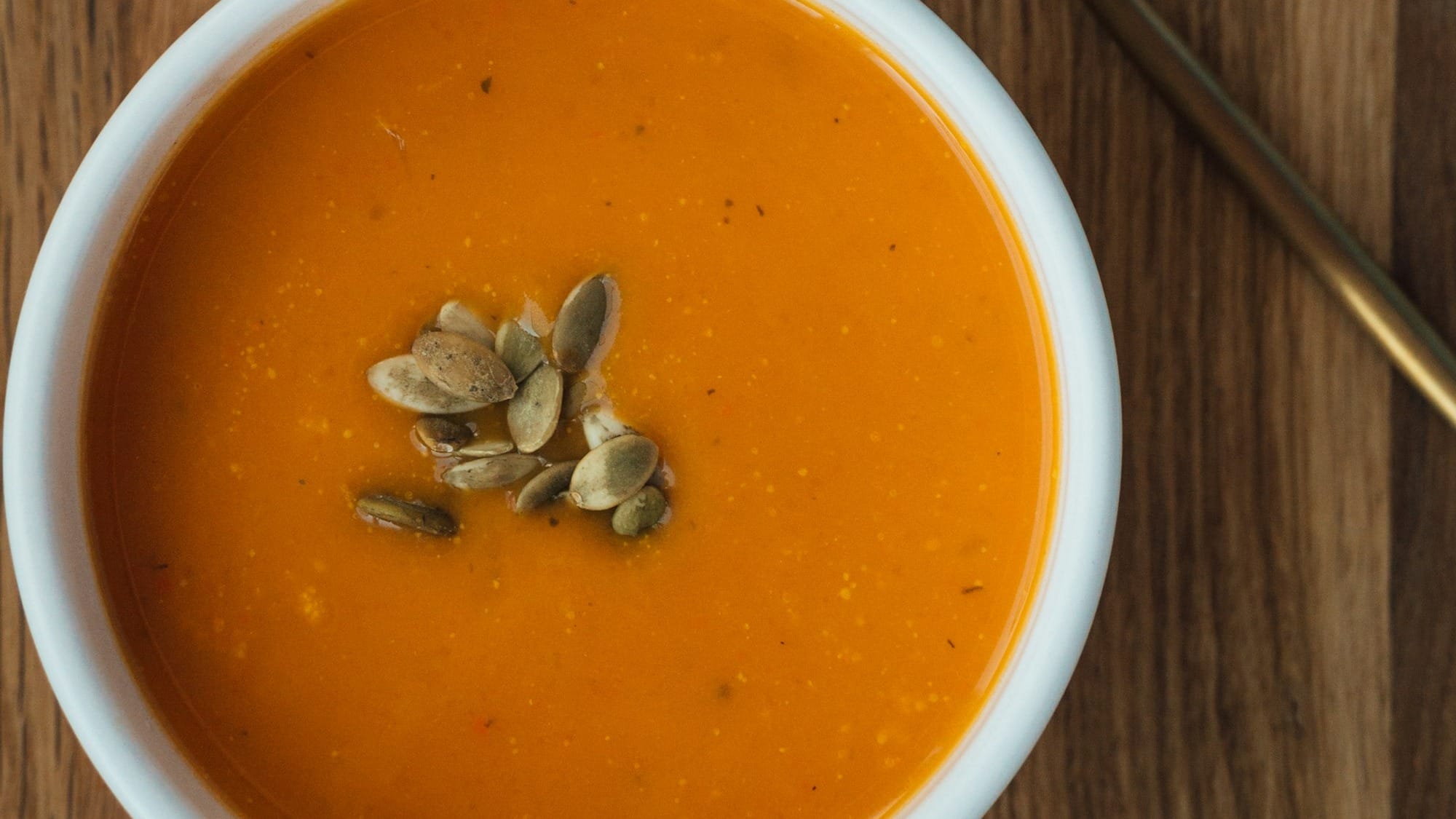
Autumn: roasted butternut squash soup
Warming and nourishing as the weather starts to cool.
Ingredients
- 1 large butternut squash
- 2 carrots
- 1 onion (quartered)
- 2 garlic cloves
- 3 tbsp EVOO
- 1 tsp ground cumin
- 1 tsp ground coriander,
- 1 litre vegetable stock
- Juice of ½ lemon
- Fresh coriander (optional)
Directions
- Peel and cube the butternut squash and carrots. Peel and roughly chop the onion, and peel the garlic cloves.
- Heat oven to 200°C (390°F). Toss squash, carrots, onion, and garlic with olive oil, cumin, coriander, salt, and pepper.
- Spread on two large baking trays. Roast for 35–40 minutes until soft and caramelised.
- Transfer to a large pot with vegetable stock. Blend until smooth (immersion blender works well). Reheat gently, adjust seasoning.
- Serve topped with fresh coriander and an extra drizzle of olive oil.
Winter: braised kale with cannellini beans
Hearty, iron-rich winter greens paired with creamy beans.
Ingredients
- 400g kale (tough stems removed, roughly chopped)
- 2 tins cannellini beans (drained and rinsed)
- 1 onion (finely sliced)
- 2 garlic cloves (sliced)
- 1 tsp chilli flakes
- 400g tin chopped tomatoes
- 250ml vegetable stock
- 3 tbps extra virgin olive oil
- Juice of ½ lemon
- Crusty bread to serve
Directions
- Heat olive oil in a large, deep pan. Add the onion and cook for 5 minutes until soft. Add garlic and chilli flakes, cook for 1 minute.
- Add kale in batches, stirring as it wilts. Once all the kale is wilted, add the tinned tomatoes, beans, and stock. Season well.
- Simmer gently for 15 minutes until kale is tender and liquid has reduced slightly. Squeeze over lemon juice.
- Serve with crusty bread for soaking up the flavourful broth. This dish improves overnight — make ahead and reheat for an even better flavour.
Take action
Start by identifying what's actually in season in your region. Many countries publish seasonal food calendars that you can reference. This week, identify a vegetable currently in season in your region. Buy it and make a meal out of it.
The following week, try another vegetable until you have a handful of different seasonal dishes that you know. Visit farmers' markets and farm shops that sell seasonal produce. Supermarkets import year-round, making it harder to identify what's truly in season. Local markets naturally feature what's currently being harvested. Use the changing seasons as natural prompts to vary your vegetable intake.
When asparagus disappears from markets, you know spring is ending. When squash appears, autumn has arrived. Let nature's calendar guide your shopping. Frozen vegetables (and some tinned or preserved vegetables) offer a compromise. Vegetables frozen immediately after harvest at peak ripeness retain most of their nutrients. Frozen peas, spinach, and tinned tomatoes can provide seasonal nutrition during off-months, whilst making life easier.
The goal is to favour seasonal, local vegetables where possible, whilst also maintaining the diversity and convenience necessary to keep it sustainable.
Sources
- McDonald D et al. American Gut Consortium; Knight R. American Gut: an Open Platform for Citizen Science Microbiome Research. mSystems. 2018 May 15;3(3):e00031-18. PMID: 29795809
- Bhardwaj RL et al. An Alarming Decline in the Nutritional Quality of Foods: The Biggest Challenge for Future Generations' Health. Foods. 2024 Mar 14;13(6):877. PMID: 38540869
- Collins EJ et al. Tomatoes: An Extensive Review of the Associated Health Impacts of Tomatoes and Factors That Can Affect Their Cultivation. Biology (Basel). 2022 Feb 4;11(2):239. PMID: 35205105
- Hou K et al. Microbiota in health and diseases. Signal Transduct Target Ther. 2022 Apr 23;7(1):135. PMID: 35461318