How to Lose Fat and Gain Muscle at the Same Time
An overview of body recomposition, explaining how fat loss and muscle gain can occur simultaneously.

Key Takeaways
- Fat and muscle are "independently controlled" tissues, meaning fat loss and muscle gain are possible at the same time.
- Only dietary protein (not fat or carbohydrate) can provide the building material for new muscle, making adequate protein essential during a calorie deficit.
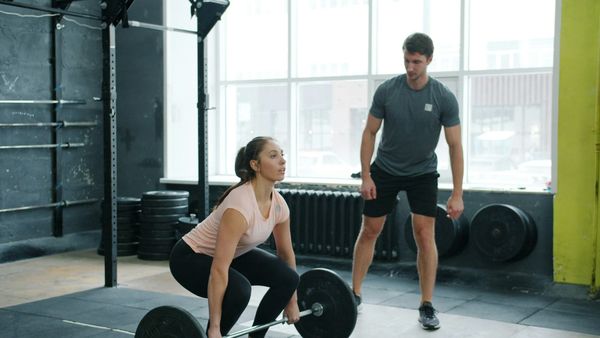
- Combining weightlifting, a moderate calorie deficit, and sufficient protein intake directs the body to burn stored fat while preserving or building muscle.
Losing fat and gaining muscle simultaneously (called 'body recomposition') requires a coordinated approach to nutrition and resistance training. This article outlines practical, evidence-based strategies to achieve both goals together at the same time.
When most people think about changing their bodies, they’ll focus on the number on the scale. But that single number obscures something far more important: what your body is actually made of. Body recomposition, which involves simultaneously reducing fat and increasing muscle, represents a different approach to defining what constitutes a “healthy” physical change. Rather than simply making your body smaller, recomposition focuses on improving what your body is made of.
Beyond body weight: body composition
Your total body weight consists of many different parts: fat mass, skeletal muscle, organs, bones, nerves, water, and connective tissue, to name a few. When you step on the scale, you're measuring all of these components together at the same time. Whereas body composition refers to how “much” of each of these different tissues you have, and (usually) their 'relative' proportions to each other (or sometimes your relative to your height).
The most commonly used body composition measure is the ratio of fat you have relative to your fat-free mass (i.e., muscle, bone, and other non-fat tissues). But many others are used as well. The distinction between body weight and body composition matters.
Two people of the same height and weight can look completely different and have vastly different health profiles depending on their body composition. The person with more muscle mass and less fat generally has better health prospects, greater functional capacity, and lower disease risk.
A contradiction
For years, conventional wisdom has suggested that building muscle and losing fat are mutually exclusive. The reasoning seemed logical: building new tissue (of any type) requires excess energy (a 'calorie surplus'), whilst burning fat requires an energy deficit. How could you possibly do both at once?
This apparent contradiction comes from viewing the body as a single, unified system with one energy system responsible for supplying and regulating all tissues in the exact same way. If only it were that simple. In reality, muscle and fat are independently controlled and respond to different things. If this were false, you would simply not be able to grow muscle in an energy deficit (but you can!)1.
Muscle vs. fat
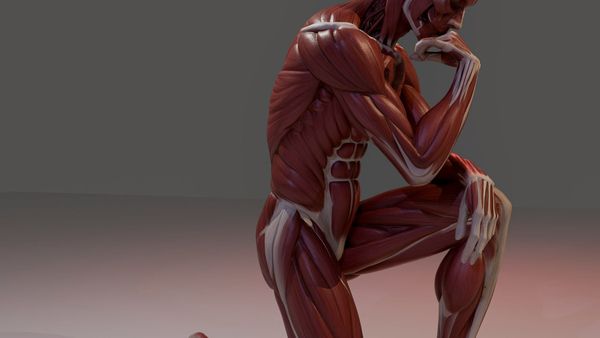
Fat tissue (or 'adipose tissue') and muscle tissue are not simply passive storage depots. Both are metabolically active, independent organs with their own hardwired systems in place. Fat tissue stores energy primarily as triglycerides and releases them when you need energy. Whereas muscle tissue is composed of proteins that contract to produce force and allow you to move around.
These tissues respond to different hormonal signals and operate on different timescales. For example, fat breakdown can occur very quickly when energy is needed. Whereas building muscle is slower and requires specific “stimuli” and conditions for it to grow, and, unlike fat, it is not completely dependent on the amount of energy you have available. This independence means that, under the right conditions, you can break down fat for energy while at the same time building muscle.
Protein: a structural requirement
Here's a crucial point: whilst energy (or “calories”) and building materials (“dietary proteins”) are both necessary for life, they serve fundamentally different purposes. Your body can use fat, carbohydrate, or protein for energy, but only protein can provide the material required to build new muscle tissue2.
Your body cannot make muscle proteins from fat or carbohydrate — they can only come from dietary protein. This is why adequate protein intake is essential for body recomposition, even when total calories are lowered to promote fat loss.
When protein intake is sufficient during an energy deficit, your body can maintain or even increase the rate at which it builds new muscle3. It can do this while breaking down stored fat to provide energy needs (which includes building muscle itself).
The energy deficit
Going from an energy surplus or balance to an energy deficit is better understood as a phase or range transition rather than an on-off switch. When you consume fewer calories than you expend, you've created a situation where your body must access stored energy to keep it going.
But this doesn't automatically mean you’ll start breaking down more of your muscle to use for energy. Your body has a choice between two major energy reserves: your fat tissue and the protein in your muscles. Which one it chooses to use depends on several factors, like how large the energy deficit is, your current energy needs, hormones, your physical activity level, and the availability of other nutrients in your body.
Moderate energy deficits combined with resistance training and an adequate supply of dietary protein can lead to the body preferentially using fat for energy while maintaining (or even building) muscle4.
“Energy partitioning”: where does it all go?
The concept that ties this all together is energy or nutrient 'partitioning'. This is basically where your body decides to send incoming energy and nutrients. Will they be metabolised for energy straightaway? Will they be stored? If so, where will they be stored? In your liver, in your fat tissue or elsewhere? Or should they be used to build new muscle tissue?
The answer to these questions is determined by a combination of different things (like your hormones, genetics, environment, and other lifestyle choices). When you combine resistance training with an adequate supply of dietary protein and a (moderate) calorie deficit, you are essentially instructing your body to send nutrients towards your muscles. You are also asking stored fat to be broken down and used for energy.
Who can achieve body recomposition?
The potential for body recomposition isn't the same across all people or circumstances. Those who are new to exercise and resistance training will likely have greater room to increase their muscle mass (in relative terms). Likewise, those who have larger amounts of body fat have greater potential to change their body composition.
Age and health status will also affect the amount of 'recomposition' you can achieve. However, this doesn't mean that those who are older, leaner, have certain diseases, have more muscle or are already well-trained can’t achieve body recomposition — because they can5.
Although still possible, there's probably a point where it becomes more “efficient” (i.e., quicker, easier and/or better results) to dedicate specific periods to building muscle (in an energy surplus) or to lose fat (in an energy deficit) than trying to achieve both at the same time.
Some people may also just want to focus primarily on one component recomposition. For example, you may want to build a lot of muscle while losing only a little fat, or you may want to lose a lot of fat while maintaining your muscle mass. You’ll need a specific plan for that.
Frequently Asked Questions
Can I build muscle and lose fat at the same rate?
You can build muscle and lose fat at the same time, but not necessarily at the same rate (or speed). Technically, you could change both tissues at the same rate, but because they’re controlled by independent processes and influenced by different things, most people tend to be able to lose fat a lot quicker than they can gain muscle.
Is body recomposition only possible for beginners?
No, but because the speed of change is typically largest for training novices or those who are already carrying a lot of fat. Leaner, well-trained people can still achieve recomposition, but the changes will probably be more modest.
If the scale doesn't move much, am I making progress?
Possibly, yes. If you're gaining muscle whilst losing fat in roughly equal amounts, your total body weight might change less than expected, but your body composition will improve significantly. There are more important things than scale weight. We’ve written a separate article on it.
Sources
- Areta JL et al. Reduced resting skeletal muscle protein synthesis is rescued by resistance exercise and protein ingestion following short-term energy deficit. Am J Physiol Endocrinol Metab. 2014 Apr 15;306(8):E989-97. PMID: 24595305
- Tipton KD, Wolfe RR. Exercise, protein metabolism, and muscle growth. Int J Sport Nutr Exerc Metab. 2001 Mar;11(1):109-32. PMID: 11255140.
- Pasiakos SM et al. Effects of high-protein diets on fat-free mass and muscle protein synthesis following weight loss: a randomized controlled trial. FASEB J. 2013 Sep;27(9):3837-47. PMID: 23739654
- Garthe I et al. Effect of two different weight-loss rates on body composition and strength and power-related performance in elite athletes. Int J Sport Nutr Exerc Metab. 2011 Apr;21(2):97-104. PMID: 21558571
- Bonilla DA et al. Editorial: New insights and advances in body recomposition. Front Nutr. 2024 Sep 3;11:1467406. PMID: 39290563