What Are Training Zones? How to Calculate & Use Them
Training zones turn random exercise into structured training. Fat loss, a faster 5K, or better health — knowing which zone to train in matters.

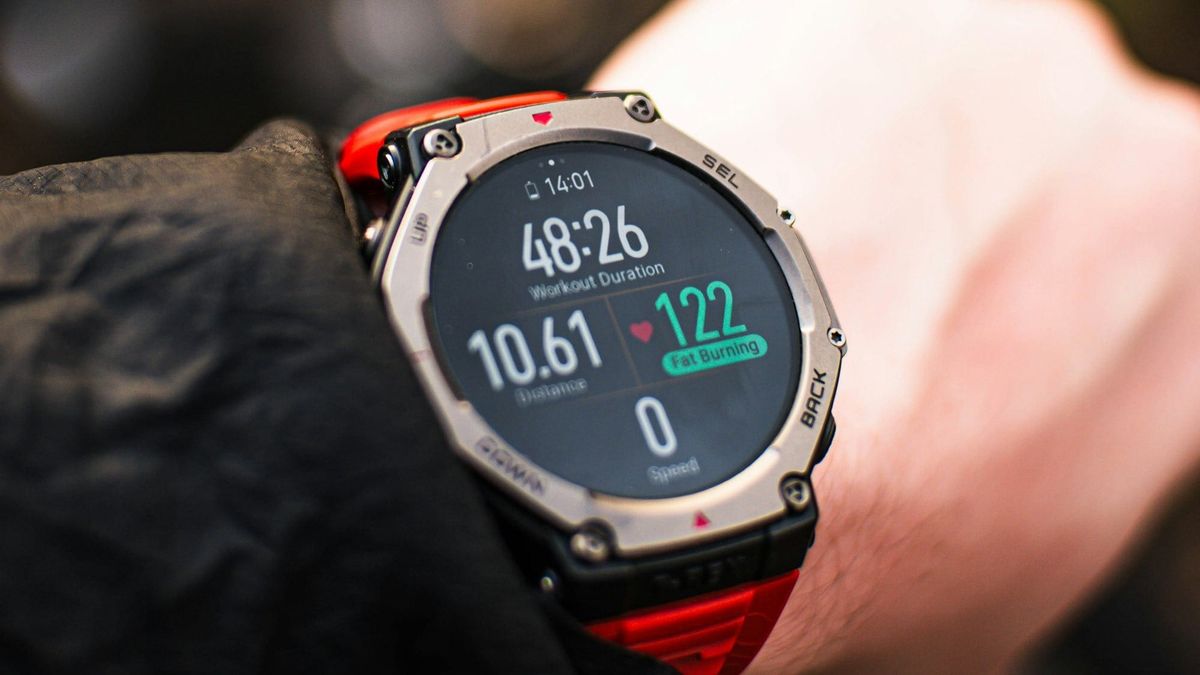
- Training zones are defined by three real physiological thresholds, meaning each zone represents a distinct metabolic "state" unique to each person.
- Most endurance athletes spend approximately 80% of their weekly training in zones 1 and 2, using zones 3 and 4 intermittently and strategically.
- A 30-minute all-out effort is a reliable field test that can be used to estimate your personal zones without laboratory equipment.
Training zones are just intensity “categories” defined by how hard you are training. They range from very easy 'active recovery' exercise intensities to all-out max effort. They are just there to help you exercise at the right intensity for the session.
In this article, we’ll go through what training zones are, how many exist, what each one does to your body, how to estimate your unique training zones, and how to use them.
What are training zones? (and why they matter)
Training zones are a range of intensities that are typically expressed as a % of your max, either heart rate (HRmax) or VO2max. These aren’t just random or arbitrary values; they represent unique 'physiological states' your body enters into when you exercise.
They're usually based on what "fuel" you’re using (fat or carbohydrate), how much oxygen you're using and what byproducts your body is making to produce energy (e.g., lactate and carbon dioxide). This is important because training at different intensities triggers different adaptations.
So the idea is: not all exercise is the same, so doing the right type of training, at the right time, will produce better results rather than training randomly.
How many training zones are there?
This is confusing, as there are no universally agreed-upon standards. There are 2, 3, 4, 5, 6 and 7 zone models1. However, we think the 3-zone or 4-zone models are the best ones.
This is because each of the zones is bordered by distinct and measurable physiological "boundaries that are split by three well-established physiological "thresholds" that have been measured for decades.
So, this means that each zone represents a unique 'physiological state' that is personalised to each person's own unique physiology. They are not based on arbitrary boundaries based on percentages or 1-10 estimates.
- First Metabolic "Aerobic" Threshold (MT1): It takes many names. They are very similar, but are calculated (or measured) slightly differently. Aerobic threshold ('AT1'), ventilatory threshold ('VT1'), and lactate threshold ('LT1') are all examples of it.
- Second Metabolic "Anaerobic" Threshold (MT2): It is also known as the anaerobic threshold (AT2), second lactate threshold (LT2), maximal lactate steady state (MLSS), second ventilatory threshold (VT2), respiratory compensation point (RCP) or critical speed (CS) or power (CP) threshold.
- VO2max: The maximum amount of oxygen your body can use. Any intensity above this threshold is purely anaerobic (without oxygen).
3 zone vs. 4 zone model
The 4-zone model we use is essentially the same standard 3-zone that has been used for decades2. The extra zone (“zone 4”) we’ve added is used to plan and prescribe high-intensity training using your pace or power output (not based on your heart rate).
Traditionally, zone 4 workouts like high-intensity interval training (HIIT), sprint and speed training haven't been used by endurance athletes. But they are now fairly common and are beneficial for endurance performance.
In practice, you can just stick with a simple 3-zone model and call zone 4 "above zone 3", which is just semantics, really. But, because there's a range of paces or power outputs above zone 3, we think it is more accurate to call it a "zone" rather than a single intensity.
Zone 4 starts from the pace or power at your VO2max and ends with your all-out 100% max or peak pace or power (as fast and hard as you can run, swim, row or pedal: it's a sprint). At the start of zone 4, you are at (or very close to) your HRmax. This means that even if you increase your pace or power output while in zone 4, there will be no further increase in your heart rate (or your VO2).
Put simply, if you're using heart rate to estimate, prescribe or monitor your training intensity, there are basically 3 zones (zones 1-3). If you're estimating, prescribing or monitoring off your pace or power output, above your VO2max, there's an extra zone (zone 4).
You can't increase your VO2 or HR above their max values, but you can increase your pace or power output above your VO2max or HRmax equivalents.
Other training zone models
The 5-zone training model is popular, being the same as our 4-zone model, only with zone 1 being split into two by an arbitrary value (usually 50-60% HRmax or VO2max).
In the 5-zone model, zone 1 is below the arbitrary value (say 60% HRmax) and 'zone 2' sits above it (but below MT1). The extra zone in the 5-zone mode ('zone 1') is commonly used to prescribe active recovery.
There are also 6-zone and 7-zone models. In these models, zone 5 from the 5-zone model, or zone 4 in our 4-zone model (i.e., all intensities above VO2max), is split into two or three more zones.
Intensities around VO2max (zone 5), all-out 100% max (zone 7), and then another zone in between (zone 6), which is defined by when your muscles stop producing lactate (called "vLamax").
The "4-Zone" Training Model
- Zone 1:
- "Light" intensity exercise
- under MT1
- < 75% HRmax
- <65 VO2max
- < 80% 30 min pace
- <4 out of 10 effort.
- Zone 2
- "Moderate" intensity exercise
- Between MT1 and MT2
- 75–85% HRmax
- <65 VO2max
- 80–100% 30 min pace
- 4–6 out of 10 effort.
- Zone 3
- "High" intensity exercise
- Between MT1 and VO2max
- 85–100% HRmax
- 85–100% VO2max
- 100–120% 30 min pace
- 7–9 out of 10 effort.
- Zone 4
- "Very High" intensity exercise
- Above VO2max
- 100% HRmax
- 100% VO2max
- Over 120% 30 min pace
- Over a 9 out of 10 effort.
What each training zone does to your body
Zone 1 — Low or light intensity
At this intensity, your aerobic system is active but not working hard. Blood flow increases gently, oxygen demand is low, and your muscles rely almost entirely on fat for their energy. This zone promotes recovery without stressing the body.
Zone 2 — Moderate intensity
The end of zone 1 and into zone 2 is arguably the most important intensity for long-term cardiovascular health and endurance performance. This is where endurance athletes will spend a lot of their time training.
Towards the middle of zone 2 (and going into zone 3), exercise starts to get hard, being at around your "race pace". Training in this zone will improve performance, but it will also take longer to recover from.
So, some coaches don’t like training too much at this intensity, as more efficient performance improvements can be achieved at higher intensities. This is a widely debated topic in the sports science community with opinions on both sides.
Zone 3 — High intensity
This is where you are pushing close to your ceiling. Your heart, lungs and muscles are working hard. You’ll get some of the most efficient stamina improvements (i.e., improvements per minute of exercise). Time spent at this intensity is typically brief (under 20 minutes total) and requires full recovery between sessions.
Zone 4 — Very high
This is near all-out, maximal efforts which last seconds. The predominant energy source for this exercise intensity is not powered by oxygen — you’re using other reserves in your body. These sessions need the longest recovery and are used to improve power output, VO2max and high-intensity exercise performance.
Terminology explained
Aerobic vs anaerobic exercise
Aerobic exercise literally means 'with oxygen.' Your muscles use oxygen to convert fat and carbohydrates into energy — in a sustainable, efficient process. Zones 1 and 2 are primarily aerobic.
Anaerobic exercise is when intensity increases past the point where you can use oxygen to generate energy quickly enough. At this point, your muscles turn to other (less efficient) ways to produce energy. These energy-making processes produce a by-product called lactate: this is what predominantly happens in zone 3 and zone 4.
“Zone 2 training”
“Zone 2” has become one of the most talked-about training zones. In the 3 and 4-zone training models, it sits at the end of zone 1 (confusingly) — just below MT1.
It’s a pace where you can hold a conversation easily, burn the most fat, you can maintain it for well over an hour, and you’ll get fitter training in this zone. It’s an efficient zone for training your stamina. Most endurance athletes will spend 80% of their total weekly training in and around zones 1 and 22.
Lactate threshold
This is where a byproduct ('lactate') starts to accumulate in your body, rising above resting levels. This is what differentiates zone 1 (no lactate accumulating) and zone 2 (blood lactate increases).
It also splits zone 2 and zone 3, where lactate starts to increase consistently, going up every time you measure it. When training in zone 3, you’ll start to feel more fatigue as more time passes.
This is why zone 3 exercise is called "unstable": because your underlying physiology is continually changing as you get more and more tired when training in this zone. Your heart rate, breathing rate, VO2, lactate, body temperature and feelings of fatigue aren't stable; they'll keep drifting up while you're in zone 3.
The key to improving your race performance is to increase your pace and power outputs at which lactate starts accumulating. However, this doesn't mean you have to always train at these threshold intensities (beginning and end of zone 2). In fact, some coaches advise avoiding it!
Polarised training (80/20)
This is where ~80% of sessions are spent in zone 1 and ~20% in zones 3 and 4, with little time spent in zone 2. Basically, they train at very high or very low intensity, with little moderate intensity training in between MT1 and MT2.
Some researchers (not all of them!) have suggested this is more efficient and effective for improving stamina and endurance3. Athletes from a lot of different sports tend to gravitate to this type of training naturally.
“FatMax”
This is the intensity at which your body burns the most fat4. It typically occurs in zone 1 or zone 2. Note that your Fatmax is not the same as burning the most calories (that’s in zone 4; more intensity means more calories burned per minute).
It just means the point at which you're burning the most fat. Your diet, fitness level, hormones, health, and what and when you last ate can shift your FatMax pace higher or lower.
How to calculate your training zones without lab equipment
The gold-standard way to know your training zones is to get an exercise physiologist to test you in a lab. However, there are also some field tests you can do yourself.